
Tag Archives: Monster Hunters of Lake County

Swamp Thing

By Ed Staskus

   “There is no Bayfield,” Oliver’s father said as he, his wife, and two children stood next to a sign on the side of the road saying “Bayfield.” The four of them looked in all four directions. They looked at the sign again. It was a bright sunny day. There wasn’t a cross road and there were no buildings. There was no town. Oliver’s father looked at his son,  who was looking at a road map.

   “Are you sure this is where the Swamp Lady is supposed to be?”

   Oliver was the Monster Hunter of Lake County. The county was in Ohio, just east of Cleveland. The family was on Prince Edward island enjoying a two week vacation. Emma was Oliver’s sister. She was 12 years old, two years older than Oliver. She was his right-hand man when it came to monster hunting.

   “This is the place, dad,” Oliver said.

   Bayfield is on the east end of Prince Edward Island, just west of North Lake. It is named after Admiral Henry Bayfield, who surveyed the coast of the island for the British Admiralty between 1842 and 1845. He spent long days tramping through woodlands to get to coastlines.

   “What I’m trying to say, Ollie, is that when it comes to this place, there is no place here.”

   Oliver was looking for the Swamp Lady. She roamed the road between Bayfield and Glencorradale. There is a large marsh along that stretch of road, hundreds of acres of it, mostly covered over by woods. The first sighting of the Swamp Lady was by Little Johnny MacDonald. It happened long ago. Little Johnny had a farmhouse and a plot of land near Bayfield. He was going home after a kitchen party one night in his horse and buggy, One minute he was looking at the rear end of his horse and the next minute he had a feeling that somebody was close by. He looked over his shoulder and saw a queer woman beside him. 

   She was sitting silently and staring straight ahead. Little Johhny didn’t know what to say and so stayed the course, letting the horse find its way. When he looked again the woman was no longer beside him. He stopped his horse and jumped out of the buggy. The Swamp Lady was nowhere to be seen. 

   “Why is she called the Swamp Lady?” Emma asked.

   “Her clothes are always wet,” Oliver said. “Her eyes, lips, and hair are black. Her dress is in tatters. Her feet are bare and dark with mud. She carries a lantern, even though it’s always unlit. When she talks her voice sounds like bubbles. But mostly, she’s called that because she lives in a swamp.”

   “All right, smarty pants,” Emma said.

   When Josephine Miller was a girl living on Priest Pond northeast of Bayfield, one early spring day she and her family hitched up the horse and went to visit relations who lived on the edge of what she called “the big bog.” They were visiting because there had been  a death in the family. On the way they saw the Swamp Lady behind a tree on one side of the road and then behind another tree on the other side of the road. 

   “Don’t mind that,” her father said. The closer they got to their relation’s farm the farther it appeared they had to go. They seemed to be moving but were stuck in the same place. The big horse pulling their wagon was walking, but no matter how much the horse walked it didn’t seem to be getting anywhere. 

   The horse and wagon finally came to a standstill. Josephine’s mother reached into the basket beside her and pulled out one of the raisin pies in it. She hopped off her seat and put the pie on the side of the road. As soon as she was back in her seat the horse and wagon began to move for real. When they looked back the Swamp Lady had the pie in her hands and was walking back into the forest.

   Raisin pie was often served in those days to family and friends at a wake following a funeral.  It was commonplace to take a gift of food to pay your last respects. Most homes had dried raisins on hand. The pie was a favorite because the ingredients were always available and the pie kept well.  That meant it could be made weeks before whatever funeral needed a pie.

   Don MacGregor grew up in nearby East Baltic but lived in Bayfield. He married his wife Elaine in the late 1970’s. One summer night he decided to join his wife at a friend’s house in Rock Barra for a card game. The friend lived on the other side of the swamp. His wife had taken the car, so he started walking. The walk was going to be twenty-or-so minutes. Half way there he caught sight of a haggard woman standing on the road. She was wearing a white wet dress. She was the Swamp Lady. She watched him silently as he approached. He walked slowly past her, tipping his hat as he did. The woman’s face were blank as an owl’s eyes. As soon as he passed her he started running. He didn’t stop until he got to the front door of the house where the card game was going on.

   “What’s the matter with you?” his wife asked. “You’re pale as a ghost” 

   “I think I’ve just seen one,” he said.

   “It was probably the Swamp Lady,” his wife said, declaring the total value of her unmatched cards and saying “Knock.” They were playing Gin.

   “The who and what did I see?” he asked.

   “The Legend of the Northside,” one of the other card players said nonchalantly while handing Don a stiff drink.

   “Come on, Ollie, it’s getting dark,” Oliver’s father said. ”It’s time we get back to North Rustico.” They were staying at the Coastline Cottages on the seashore just off the town’s harbor. Everybody piled into their Jeep Cherokee and they drove away.

   The Swamp Lady watched them drive away. “I’ll have to talk to that wee boy if he ever comes back by himself” she said to herself before taking a bite of the slice of raisin pie she had in her hand. She only talked to those who believed in her existence. She never said a word to those who doubted her. She didn’t doubt that Oliver believed in her. 

   She would wait for the boy. She had all the time in the world. The swamp was here to stay. Neither it nor she were going anywhere.

Ed Staskus posts monthly on 147 Stanley Street at http://www.147stanleystreet.com, Made in Cleveland http://www.clevelandohiodaybook.com, Down East http://www.redroadpei.com, and Lithuanian Journal http://www.lithuanianjournal.com. To get the site’s monthly feature in your in-box click on “Follow.”

“Ebb Tide” by Ed Staskus

“A stem-winder in the Maritimes.” Sam Winchell, Beyond Fiction

Available at Amazon: https://www.amazon.com/dp/B0CVDP8B58

Summer, 1989. A small town on Prince Edward Island. Mob money on the move gone missing. Two hired guns from Montreal. One RCMP constable stands in the way.

A Crying of Lot 49 Publication

Lay of the Land

By Ed Staskus

   When Oliver’s father steered their Jeep Cherokee off the Confederation Bridge and past the Gateway Factory Outlet, he turned on his GPS. He hadn’t told his family, but since entering Canada he had been steering by the stars, by the compass on his dashboard display, not using a map or GPS. The digital compass was up to date snazzy  but old-fashioned like every other compass. He was an electrical engineer attuned to high tech, but sometimes he ditched it. 

   When they had crossed into New Brunswick from Maine, he thought, the island is due east of us, so I’ll just drive due east until we get to it. Other than having to navigate a rotary in the middle of nowhere, the family got to Prince Edward Island with no problem.

   After crossing New Brunswick, he continued on to PEI’s Route 13 through Crapaud, Kellys Cross, Hunter River, and New Glasgow. The family was on its way to the Coastline Cottages in North Rustico for two weeks.

   “Dad,” Oliver asked his father, “how come there are no billboards on the roads here like at home?”

   “That’s a good question, Ollie, but I don’t know.”

   There are nearly 20,000 highway billboard signs in Ohio. There are many more of them dotting the state’s towns and cities. Advertising is legalized lying. Billboards are big and bold about it.

   “I know why, “ Emma said. “Most billboards are banned.”

    “How do you know that?” Oliver asked.

   “Because I did my research, not like some people I know,” she said.

   Oliver was the Monster Hunter of Lake County. He was ten years old. Emma was his older sister by two years. They lived in Perry, Ohio. After the pinching and pushing in the back seat was over, Emma told her family what she knew.

   “No billboards are allowed on most of the roads on PEI, which is what everybody calls the island. It was named after Prince Edward, who became the father of Queen Victoria. He never set foot on ground here. He was like a ghost. The lion on top of the PEI flag is an English lion. The official bird is the Blue Jay. The official animal is the Red Fox. The official boss is called the Premier. Every fifth potato grown in Canada comes from here, which is why some people call it Spud Island.”

   “Anything else, clever clogs?” Oliver asked.

   “No more fighting,” their mother immediately commanded from the front seat.

    That night, after finding the Coastline Cottages and unpacking, they sat in an array of Adirondack chairs on the wide slopping lawn that dead-ended at the Gulf of St. Lawrence, and scanned the dark sky for stars and constellations. Light pollution where they lived in northeast Ohio obscures most of the stars most of the time. From their chairs on the lawn, the family saw many more than they had ever seen.

   “That’s a boatload of stars,” Oliver said.

   “That’s only some of them,” his father said. “There are more stars in the sky than all the grains of sand on all the world’s beaches.”

   “Oh, wow! Who counted them all? Did you, dad?”

   “Not me, Carl Sagan did.”

   A fox chased a zigzagging rabbit in the dark field behind them. There were no streetlights anywhere. The stars twinkled in the inky sky.

   The next day they drove the Gulf Shore Parkway to Stanhope Main, a beach just east of Brackley Beach in the National Park. There was a mile-or-more of sand and dunes. The water was shallow and there were sandbars. It had been a local hotspot during Prince Edward Island’s rum-running days, both for landing booze and having a party.

   Oliver and Emma built inukshuks on the beach, which Emma had also researched. She taught Oliver the mechanics of making them. Inukshuks are human-like figures made of piled stones. They are central to Inuit culture in the Arctic. A red inuksuk is on the flag of their land called Nunavut. The word itself means “to act in the capacity of a human.” They are sometimes used as guideposts showing the way.

   “Dad always says you can learn more from a guide in one day than you can in three months of fishing alone,” Emma said.

   “But dad doesn’t fish,” Oliver said.

   “Oh, you’re right,’ Emma said.

   The tide came in as the afternoon wore on. They packed up and walked back to the parking lot. Oliver found a scrap of paper sticking out of the Marram grass bordering the path. It said, “If you disbelieve in spirits and have faith that you will die in your bed, you may care to watch at Holland Cove at night at the hour when the tide is high.” 

   “Dad, do you know where Holland Cove is?” Oliver asked his father. 

   “No, but I can look it up on my phone.” He found it on his cell phone.

   “It’s near Charlottetown.”

   “When are we going to see ‘Anne of Green Gables’ in Charlottetown?”

   “Tomorrow night,” his father said. “Why?”

   “Can we stop and see Holland Cove after the show?” 

   “Is there something there you want to see?”

   “Yes.”

   “OK, we’ll swing by afterwords.”

   They saw the song and dance stage show the next night at the Confederation Centre, buzzing about it afterwards as they walked back to their car.

   “That girl playing Anne had some Broadway belt in her voice,” their father said.

   “She was almost pure energy,” their mother said. “The show was wonderful. I’m glad we could take the kids.”

   “I was so sad when Matthew died,” Emma said.

   “Me too, sis,” Oliver said.

   It didn’t take them long to get to Holland Cove after the musical show. They parked near the shore. Oliver said they would have to wait for whatever was going to happen to happen.

   Samuel Holland had been the Surveyor-General for the northern half of North America in the mid-18thcentury. He was responsible for the partitioning of Prince Edward Island into 67 lots back in the day. He had come to the island in 1764. His wife Racine came with him. She was tall, pretty, and French. One of Samuel Holland’s surveying trips took him longer than he planned. Racine was anxious about his absence. She bundled up and went out on the ice on the cove to see if she could spot him. The ice was thinner then she expected. She fell through it and drowned a day before her husband returned.

   After her body washed ashore and Samuel Holland buried her, he started seeing her apparition. She always brought a flagon of water with her and called for him. More than two centuries later her voice is still heard along the shoreline of Holland Cove calling for her husband. She has long black hair and is dressed in a white robe. She comes out of the surf, prowls the beach, and returns to the cove disappointed. Many believe that those who see her will themselves soon drown.

   When she came out of the surf only Oliver and Emma could see her. Their parents couldn’t see the apparition. They didn’t believe such a thing was possible. Oliver and Emma met her on the beach. Oliver meant to explain to Racine that she was dead and gone. They introduced themselves. Racine’s face was obscured by mist.

   “Where is Samuel?” she asked them.

   “He died some years after you died, so long ago nobody can remember what either of you ever looked like,” Oliver said. 

   “Oh, no one told me,” she said.

   Sometimes ghosts are muddled and don’t even know they have died. When they find out they are bemused.

   “Do you know you are dead?” Emma asked.

   “No, I didn’t know.”

   “Do you know there are those who believe they will themselves soon drown if they see you?”

   “That’s terrible,” she said. She knew firsthand how terrible it was.

   “Would you like to move on?”

    “Yes, but how do I do that?” 

   “When you are back in the ocean tap the heels of your shoes together and say three times, ‘I do believe in Heaven and Hell.’”

   “I will do that,” Racine said. She turned and strode into the surf, never to be seen again. Oliver and Emma ran back to where their parents were waiting for them.

   “Did you see what you came to see?” their father asked.

   “Yes, but what we saw has moved on to another place,” Oliver said.

   “Up there with the stars,” Emma said pointing up at the sky.

Ed Staskus posts monthly on 147 Stanley Street http://www.147stanleystreet.com, Made in Cleveland http://www.clevelandohiodaybook.com, Atlantic Canada http://www.redroadpei.com, and Lithuanian Journal http://www.lithuanianjournal.com

“Ebb Tide” by Ed Staskus

“A stem-winder in the Maritimes.” Sam Winchell, Beyond Fiction

Available at Amazon: https://www.amazon.com/dp/B0CVDP8B58

Summer, 1989. A small town on Prince Edward Island. Mob money on the move gone missing. Two hired guns from Montreal. One RCMP officer stands in the way.

A Crying of Lot 49 Publication

Making Tracks to Prince Edward Island

By Ed Staskus

   “Hustle it up, kids,” Oliver and Emma’s father said. Oliver was 10  years old. Emma  was 12 years old. Oliver was the Monster Hunter of Lake County. Emma was his sister. She considered herself Oliver’s right-hand man and the brains behind their monster hunting. The family was on their way to Prince Edward Island, which was 1228 miles away from Perry, Ohio, which was where they lived. They were going by car. Their car was a Jeep Cherokee.

   They stopped at a Sheetz at the entrance to I-90, filled up the gas tank, and headed east. They got to Erie in no time and kept going. They drove past Buffalo and Rochester but got off the interstate when they got to the Finger Lakes. They stopped in Waterloo and had a New York Pickle pizza at Ciccino’s Pizzeria.

   “Are we going to the quilt farm after we finish eating?” Emma asked.

   “Yes,” her mother said.

   The farm was on Seneca Lake near Pen Yan. On the way they passed several black and yellow road signs depicting a horse and buggy.

   “Mom, what are those signs?” Emma asked.

   “There are hundreds of Mennonite families up and down these lakes. Some of them get around with horses and buggies.”

   “Who are Mennonites.”

   “They’re cousins to the Amish.”

   The Amish and Mennonites trace their roots to the Anabaptist movement of the early 16th century. Anabaptist is a nickname that means they are rebaptizers. They came from Switzerland and Germany. Both denominations believe modern advances are helpful but only if they  support a simple and humble life.

   “Why don’t they drive cars like us?”

   “The Amish stick to a strict interpretation of the Bible, which means they usually don’t use modern technology in their daily lives. Some Mennonites are old order, so they have horse-and-buggy transportation. Other Mennonites drive cars and wear clothes like us. It just depends.”

   Pauline Weaver and her Mennonite quilters have been making quilts at Weaver View Farm for thirty years. Their prize-winning bedspreads have been featured in Smithsonian Magazine. Dozens of quilts hang from the rafters of their restored 19th century dairy barn.

   “What’s the difference between Amish and Mennonite quilts?” Pauline said. “Not much. Maybe Amish just rolls off the tongue easier than Mennonite.”

   Emma’s mother was looking for a Lone Star pieced quilt.

   “Is it true Mennonite quilters always make an intentional mistake to show humility before God” she asked.

    “I don’t know how that one got started,” Pauline said. “As for me, I make enough mistakes as it is.”

   After they put in their order for the design they wanted on a quilt that would be shipped to them in a couple of months, and were preparing to leave, Emma’s mom asked if quilting bees were still common.

   “Quilting bees really aren’t all that common anymore,” Pauline said. “Sometimes a family will suffer a catastrophe and we’ll do a quilting bee to raise money. A quilting bee is a little like a barn raising. A quilt is completed in a single day. It’s not so hard to do with a large group of women, but the quilters do end up working very quickly.”

   They got back on Rt. 14S and were soon back on I-90. They drove past Albany, the Berkshires, skirted Boston, and stopped in Portland across the border in Maine for the night. They were staying the night near the waterfront. After walking up and down Commercial St. they stopped at Gilbert’s Chowder House and had chowder. Afterwards they walked down the Custom House Wharf. 

   “Dad, Is it OK if we talk to that man writing on that thing,” Oliver asked. A man was sitting on a lawn chair beside the Coastal Bait Shop. He was hunched over tapping at a mint green typewriter. The typewriter was on a red milk crate which was on a block of concrete.

   “Yes, but stay right there until we come back,” his father said. “ We’re going to walk to the end of the wharf and then come back.”

   “Hi mister,” Oliver said, Emma at his side.

   “Hi kids,” the man said.

   “What is that thing?” Oliver asked.

   “It’s a typewriter, a portable Royal, like a laptop.”

   “Where did you get it?”

   “I got it at a rummage sale. Everything works except the letter W.”

   “Why doesn’t it work?” 

   “The rods here hold the letters that hit the paper. When I strike a key a rod swings up and hits this ink-coated tape which transfers the letter to the page, except the W, which is missing.” 

   “Oh.”

   “I’m writing my life story.”

   “Oh.”

   “My name is William.”

   “I’m Oliver and this is my sister Emma.”

   “Where are your parents?”

   “Down there by the water.”

   “Good,” William said. “I’m not up for two orphans.”

   William was wearing a Panama hat on top of a head of dreadlocks, a sleeveless ribbed undershirt, baggy blue pajama pants, and orange Crocs. He was smoking a Calabash pipe, the kind Sherlock Holmes used to smoke.

   “Who’s Sherlock Holmes?” Oliver asked.

   “A detective from long ago.”

   “Are you making a book about your life?”

   “Yes and no,” William said. “I write a chapter every day but at the end of the day I throw whatever I’ve written into that trash can over there.” He pointed at a trash can.

   “Why do you do that?”

   “Life isn’t about finding yourself. It’s about creating yourself. That’s what it’s all about, in the wink of an eye.”

   Neither Oliver nor Emma knew what to say, so they said, “Here come our parents.”

   “It’s been nice talking to you kids,” William said. “Do you want to hear a secret?”

   “Sure.”

   “Everything depends on a 6-inch layer of topsoil and the fact that it rains.”

   “Oh, OK, thanks for the secret.”

   The next day they got up early, had an early breakfast, and got going north on I-95. The highway starts in Miami in Florida and ends in Houlton in Maine. Every few miles they saw a sign saying “Beware Moose Crossing.”

   “We have to be careful about moose coming on to the road,” their father said, “although they mostly come out at dawn and dusk and in between at night. We’ll be on Prince Edward Island before it gets dark though.”

   “Moose are really big,” Emma said.

   “They are about a thousand pounds.”

   “What would happen if we hit one?”

   “We’re not going to hit one.”

   When they got to Houlton they filled up their gas tank at an Irving’s and drove the couple of miles to the Canadian border. They had to wait in line. When they got to the guard booth a dark man in a blue uniform wearing a turban leaned out towards them. His name tag said he was Gagan Singh. He asked them for their passports. The family had NEXUS cards and handed them over.

   “Are all of you American citizens?”

   “Yes.”

   “Where are you from?”

   They told him they were from Perry, Ohio.

   “What is your destination?”

   “Prince Edward Island.”

   “What is the purpose of your trip?”

   “Vacation.”

   “Have a good trip,” the border guard said.

   They drove into the province of New Brunswick, which they would have to cross the length of to get to Prince Edward Island.

   “Dad, that man, he asked us if we were citizens, but he didn’t look like a citizen,” Oliver said.

  “He was probably an immigrant who became a citizen. I think he is a Sikh.”

   “What’s that’s?”

   ”It’s a religion, like being Catholic They’re from India.”

   “Why don’t they stay in India? Why are they in Canada?”

   “Probably for the same reason there are immigrants everywhere.”

   “What’s the reason?”

   “There are different reasons. Most of time it’s to go somewhere where they can find a better life. Maybe there were no jobs where they lived, or the climate was getting bad, or there was a war going on.”

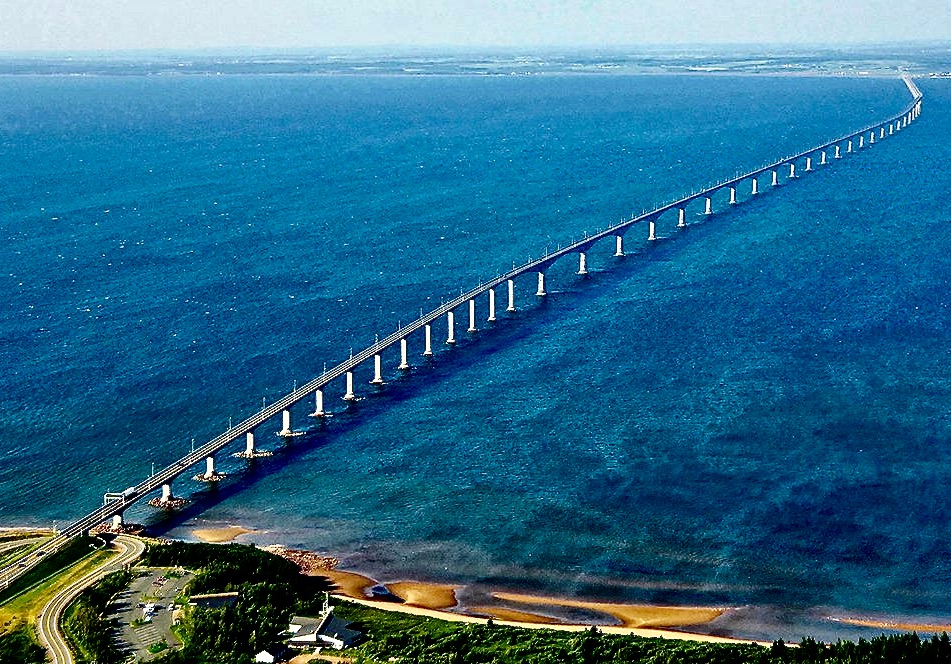
   They drove east past Woodstock, Frederickton, and Moncton. When they got to Sackville they stopped for a bite to eat at the Cackling Goose Market. An hour later they were at the Confederation Bridge. Before 1993 the only way to get to and leave the island was by car ferry. After 1993 there was the bridge. It is a nearly 8-mile long box girder bridge carrying the Trans-Canada Highway across the Abegweit Passage of the Northumberland Strait, linking Prince Edward Island with the mainland. It is the same length as 117 football fields. It weighs almost 8 billion pounds. The average person weighs about 150 pounds so the bridge equals 50,000,000 people.

   “That’s a mighty big bridge!” Emma said.

   “And long, too,” Oliver said.

   They got to North Rustico on the north side of the island before dusk. They were going to stay in one of the cottages at the Coastline Cottages just outside of town on the coast of the Gulf of St. Lawrence. When they drove up the long drive they passed a kidney-shaped salt water pool.

   “You didn’t tell us they had a swimming pool!” Oliver and Emma exclaimed at the same time. 

   “They do and it’s open every day it doesn’t rain.”

   “Does it rain much?”

   “Not too much.”

   “Woohoo!”

Ed Staskus posts monthly on 147 Stanley Street http://www.147stanleystreet.com, Made in Cleveland http://www.clevelandohiodaybook.com, Down East http://www.redroadpei.com, and Lithuanian Journal http://www.lithuanianjournal.com.

“Ebb Tide” by Ed Staskus

“A stem-winder in the Maritimes.” Sam Winchell, Beyond Fiction

Available at Amazon: https://www.amazon.com/dp/B0CVDP8B58

Summer 1989. A small town on Prince Edward Island. Mob money in transit gone missing. Two hired guns from Montreal. One RCMP officer stands in their way.

A Crying of Lot 49 Publication

Sympathy for the Devil

By Ed Staskus

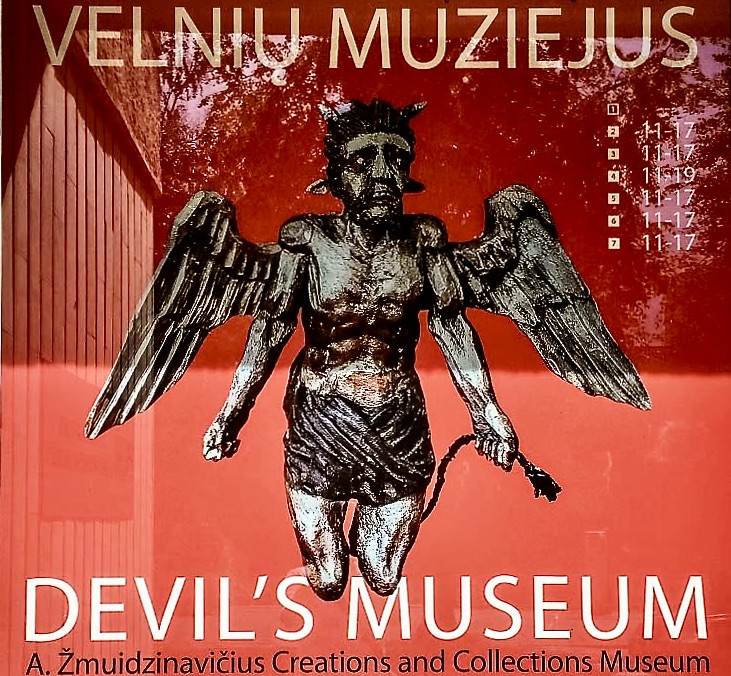
   There was a line waiting for the museum to open. The line snaking its way to the front door was at the Žmuidzinavičius Museumotherwise known as the Devil’s Museum. It was dedicated to collecting and exhibiting fiendish sculptures and carvings from around the world. It was the place to get up close and personal with Satan. 

   The collection was started as a sideline by the artist Antanas Žmuidzinavičius. One of his first collected sculptures was the Trampled Devil, given to him by a priest in 1908. The sculpture had been so big the priest couldn’t move it, so he sawed it in half. He kept the half that was Saint Michael Archangel, who had been doing the  trampling. The museum got the other half. 

   The hall of fame was established in the artist’s home after his death in 1966. There were 260 sculptures in the collection then. Before long, museum goers began to donate their own devils, leaving them in the vestibule. By 1982 a three-story extension had to be built to house the ever-growing accumulation. By the time Oliver and his father went to the museum it had grown to more than 3,000 items.

   Oliver was the Monster Hunter of Lake County. He lived in Perry, Ohio, near Cleveland. He was on his summer vacation. He was far away from home in Lithuania with his father, who was on a working trip with a three-man electrical engineering team tasked with improving the workings of the Heat and Power Plant of Kaunas.

   Most of the devils in the museum are sculptures in wood or ceramic. Some are stone, almost as immutable as evil. Others are masks or paintings. Some are made of silk, paper, or canvas. They are from all around the world, from many different times and places. The devil has always sat on mankind’s left shoulder.

   A cluster of older men was in front of Oliver and his father, who were in the middle of the line. One of them blew his runny nose. Another one snorted like a tired walrus. The men were Mao Zedong, Adolf Hitler, Joseph Stalin, Pol Pot, Saddam Hussein, Vladimir Putin, and the Apprentice. They were the kind of men who let the devil use their brain pans as a garbage dump. 

   Putin and the Apprentice were standing shoulder to shoulder, except the Apprentice was half a step behind the Russian strongman. That was the way the strongman wanted it. The Apprentice was an orange-skinned old man who spoke in riddles and wanted to be a tyrant so bad he could spit. He shifted his weight from one foot to the other. He couldn’t wait for the museum to open. He had to go to the bathroom bad. He didn’t want to pee in his pants. That would be VERY BAD!

   “Why is this always happening to me?” he complained. “I made my deal with the devil. Why can’t he take care of the details? On top of that, why can’t he deliver a younger stormy girl to my hotel room, where they have bathrooms only a step away?”

   No matter what, though, he knew he wasn’t getting his soul back anytime soon. He knew how spin falsehoods like nobody’s business, so much so that he had climbed the ladder of them to the highest places in society. He was shrewd enough to not believe his own lies, however, unless they personally benefitted him. He was loyal to one man only, and that was himself. Everybody else found out sooner or later that the Apprentice’s loyalty street was a one-way street.

   Oliver wasn’t interested in the Devil’s Museum for art’s sake. He was interested in it because he needed to know as much about monsters as possible if he was going to go nose-to-nose with them. One of his cranky uncles had told him, “Keep your friends close, but your enemies closer.” His other cranky uncle said, “Don’t pay attention to that blowhard.” Oliver wasn’t sure what it all meant, but his enemies in the monster world could be beyond cranky, so he always kept their wrong side at the front side of his mind.

   The doors of the museum opened. The line began to inch forward. Oliver noticed something odd about the group of old men in front of him. They were walking in single file, each man holding onto the shoulder of the man in front of him. He had seen a cartoon like that once. He wondered if they were blind. When the group of old men paused to have their tickets validated, Oliver slipped in front of Adolf Hitler, who was the point man, and waved his hand in front of Der Fuhrer’s face. The despot’s toothbrush mustache twitched but his eyes stayed focused on nothing.

   “Dad, I think those men are all blind.”

   “That’s too bad but be good and don’t bother them.”

   The devil appears in more than five thousand Lithuanian yarns and fairy tales. There are more than a thousand names for him in the Lithuanian language, names like Kipšas, which means the dickens, Pinčiukas, which means the deuce, and Bekelnis, which means without pants. There are more than four hundred place names in Lithuania related to the devil, places like Velnio Duobė, which means the Devil’s Hole, Velniaraistis, which means the Devil’s Bog, and Velniabalė, which means the Devil’s Swamp. 

   The ground floor had folk art devil souvenirs galore, medals, masks, sculptures, ceramics, candlesticks, whistles, calendars, and coffee mugs. They made great gifts. After giving everything a once-over, Oliver went upstairs. All the objects upstairs had been created by folk craftsmen and professional artists. On the third floor were devils left by foreigners from American, Asian, and African countries. They were displayed according to their country of origin. One sculpture depicted Adolf Hitler and Joseph Stalin doing a dance of death over a pile of bones.

   When Oliver went back down to the ground floor, he saw the seven blind autocrats doing an awkward line dance like seven dwarfs on magic mushrooms. Adolf Hitler led the jig parade, the rest of the men following his lead as best they could and doing their own madcap high stepping. Mao Zedong whooped it up in tongues while Joseph Stalin cracked a smile, the first in more than half a century. They seemed to be having a good time.

   “The jig is up!” a voice called out. It was Satan, the one and only, in the flesh. He was wearing a top hat that concealed his horns. “This is the thanks I get for giving you a half-day off?” he thundered, waving his sword cane.

   “The devil made me do it,” the Apprentice said, parroting Flip Wilson and pointing in all directions. “Everybody is against me. It is so unfair!” He was panting and his face was flushed. His damp hair hung down his forehead.

   “This is a house of worship, not a honky-tonk,” Satan said. “Your time is over. I want all of you out of here right now!”

   A back door opened seemingly on its own. The line of men went out the door, each of them holding onto the shoulder of the man in front of him. No sooner were they in the back alley than a sewer grate picked itself up and rolled to the side. Adolf Hitler unwittingly stepped into the open sewer hole and toppled down into it. The rest of the line followed him like lemmings. They went down the sulphury brimstone hole one after the other.

   When the back door slammed itself shut Satan turned to see Oliver looking up at him.

   “Hell’s bells, if it isn’t the little monster hunter from Ohio,” he said.

   “I’m big enough to stand up for myself,” Oliver said,

   “Big talk from a small fry,” Satan said and reached down to poke him in the eye.

   Oliver kicked him in the shin. 

   “That hurt, you wicked boy,” Satan said. He shape-shifted into a goat and tried to head butt Oliver. 

   The devil wasn’t scared of anything except the cross and the rosary and some other things, like Saint Michael. He was rattled by prayers even though he needed prayers more than anybody in the universe. He was spooked by flax, wild ash, consecrated water, and the number one. Oliver raised his forefinger making the sign of the number one. The goat bleated and backed away.

   “My mom says don’t open the door to the devil,” Oliver said.

   “I say the devil’s voice is sweet to hear,” Satan said.

   “Tell the truth and shame the devil,” Oliver said. “You are sour. You don’t know how to sing, only howl.”

   “You are driving me to distraction,” Satan said.

   “Go distract yourself somewhere else, like Mars,” Oliver said.

   Satan snorted, breathing fire.

   “Go away,” Oliver said.

   “Who were you talking to?” Oliver’s father asked, walking up as the devil walked away. Satan knew there were second chances all around the world.

   “Nobody, dad. Can we go get a sweet treat?”

   “Yes, let’s go to Gelato Archie and cool off. It’s hot in here.”

Ed Staskus posts monthly on 147 Stanley Street http://www.147stanleystreet.com, Made in Cleveland http://www.clevelandohiodaybook.com, Atlantic Canada http://www.redroadpei.com, and Lithuanian Journal http://www.lithuanianjournal.com

“Ebb Tide” by Ed Staskus

“A stem-winder in the Maritimes.” Sam Winchell, Beyond Fiction

Available at Amazon: https://www.amazon.com/dp/B0CVDP8B58

A small town on Prince Edward Island. Summer 1989. A missing rucksack full of one hundred dollar bills. Two hired guns from Montreal. One RCMP officer stands in their way.

A Crying of Lot 49 Publication

Snake in the Grass

By Ed Staskus

   Oliver and his father were at Meinrage Beach, just north of Klaipeda and south of the Giruliai Nudist Beach. It was a week after they had arrived in Lithuania. Meinrage means mirage in German. Klaipeda is a port city on Lithuania’s western border with Germany. It wasn’t always a Lithuanian city. When it was sauerkraut land it was called Memel. After World War One the city and its surrounding district were split off from Prussia by the Treaty of Versailles. Lithuania annexed all of it in 1923.

   The boy and his father had left Kaunas at sunrise at 5:30 in the morning. It took them less than three hours to drive to the shore of the Baltic Sea. It was a fine Saturday, warm and sunny. The sun wouldn’t be setting until after 9:30, making it a long fine Saturday. They stopped at the beach near the spit to sit in the sun. Oliver thought they might visit the Hill of Witches on the other side of town. It was a museum of wooden sculptures, full of devils and witches.

   Oliver was nine and  half years old. He was the Monster Hunter of Lake County. He lived in Perry, Ohio, west of Cleveland, with his sister Emma, mother, and father. His father was an electrical engineer who had been sent as part of a three-man team to the Heat and Power Plant of Kaunas to help modernize it. Oliver had tagged along, being on summer vacation.

   His father was partly Transylvanian Saxon and partly Lithuanian. He spoke enough Lithuanian to get by. He didn’t speak Transylvanian or Saxon. Oliver’s forebears had been from central Romania, where Saxon farmers and fighting men had emigrated 700 years earlier. Transylvania is known for mountains, medieval towns, and castles like Bran Castle, a fortress linked to the legend of Dracula. His grandfather had lived in Brașov, which featured thick walls and bastions, as well as the  Black Church. The Saxon churches were fortified in case prayer didn’t prove effective against Muslim marauders. 

   His grandmother had come from the Baltics. She was from the small town of Rokiskis near the Latvian border. She was born just after World War Two broke out. Her family fled their home in 1944, never to return, eventually making their way to the United States. Oliver’s grandparents met, got married, and set up shop on the ethnic east side of Cleveland.

   His father was taking a nap on a green blanket spread out on the white sand when Oliver went for a walk. He waked along the seashore, up a dune, down another dune, and ran through the surf. On the way back he noticed five solitary trees standing in a row at the far side of the beach. The trees were five different kinds. He went over to them, curious why five of them would be in a row. A creek came out of the woods there and drained into the Baltic Sea. The trees had all the fresh water they needed at their feet.

   One was an oak tree, one was an ash tree, one was a birch, one was an aspen, and one was a spruce. He looked up at the spruce tree when it began to talk to him.

   “Young man, do you know any spells or incantations that will restore me and my family to human life?”

   “I might,” Oliver said. “Were you people once?”

   “Yes,” the spruce tree said. 

   “What happened?’ Oliver asked. “How did you become trees?”

   “It was a warm and sunny day, just like this day,” the spruce tree said. “I was swimming here with my two sisters. When we returned to the shore to get dressed, I found a snake in my clothes. The snake spoke to me in a man’s voice. He promised to return my clothes if I promised to marry him. I needed my clothes. I couldn’t go naked. I said I would marry him. Three days later a knot of snakes in a wagon showed up at my parent’s farm. They came to claim me. Their leader said, ‘We are here to take Egle to our master.’ My parents tried to trick him by giving him one of our farm animals, but a bird of passage warned the snake about the trickery. In the end they wound themselves tightly around me and took me away.”

   “I’m iffy about snakes,” Oliver said. “Even when they’re not poisonous they can be venomous.”

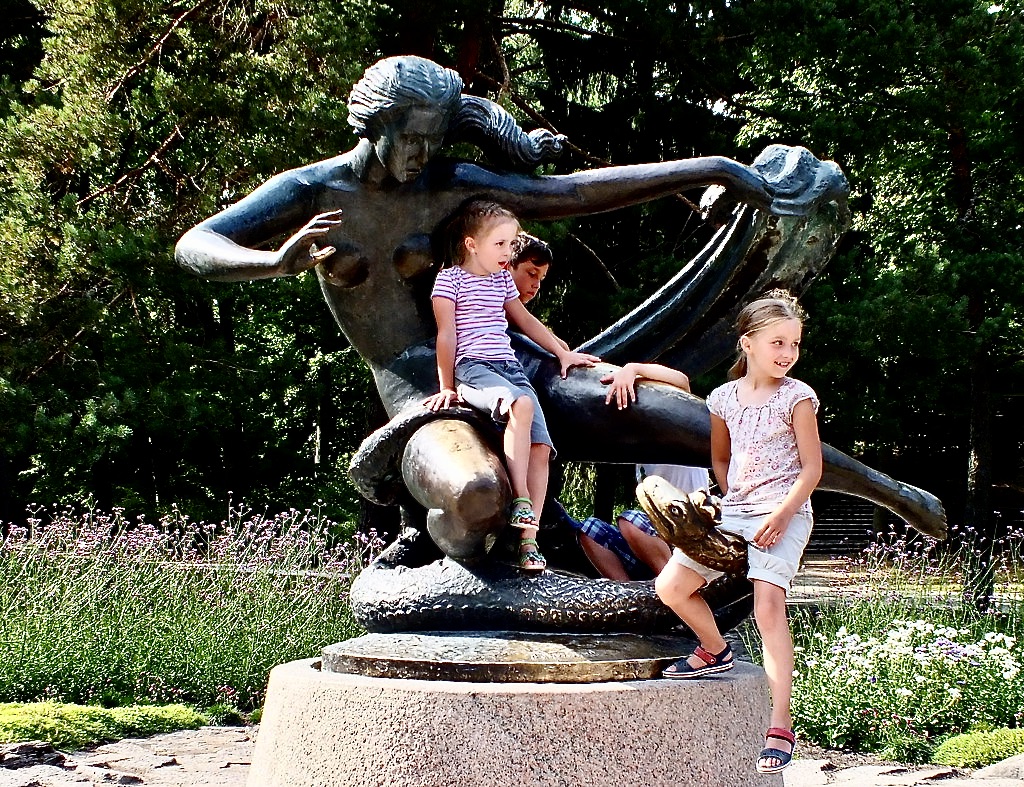
   “They took me to the seashore where I met Žilvinas, who was the Snake King,” Egle said, ignoring Oliver’s observation. “He was young and handsome. He took me to an island and then to his palace under the water. We got married and lived happily. We had three sons, Ažuolas, Uosis, and Beržas, and a daughter, Drebulė.

   “The children started asking about my former home above the water. I became homesick and asked my husband to let me and our children visit my parent’s farm. He was against it and set many impossible conditions, which were to spin a never-ending mound of silk, to wear out a pair of iron shoes, and to bake a pie without kitchen utensils. A kind sorceress helped me accomplish all the conditions and my husband had to let me and our children go.

   “Our reunion was a happy one. We stayed for a month. When time came to return to our underwater palace, my parents did not want to let me go. They decided to kill Žilvinas. They needed to find out how to get him to come up from the sea. I wouldn’t tell them. They insisted my children reveal the secret. My sons refused to tell them, but my daughter got scared and told them the secret.”

   “What happened when they found out?” Oliver asked.

   “I had twelve brothers. They got their scythes and marched to the seashore. They had an evil plan. They called for Žilvinas with the secret words they had wrested from Drebule. My husband appeared in the form of a snake and my twelve brothers hacked him to pieces with their scythes. When they got back to my parent’s farm they didn’t say a word about what they had done.

   “The next day, ending our stay, my children and I went  to the seashore and called for Žilvinas. The only answer we got was a bloody foam that appeared at our feet. I realized my husband was dead. In my grief I summoned my kind sorceress and she transformed us into trees. My sons became an oak, an ash, and a birch, and my daughter became an aspen. I became a spruce.”

   “Why don’t you ask your sorceress friend to help you?” Oliver asked.

   “She has disappeared off the face of the earth,” Egle said. “Nobody has been able to help us these many long years.”

   “OK, I’ll try “ Oliver said.

   He knew an incantation he had learned from the honey badger who lived in the woods behind their house in Perry, Ohio. The honey badger used the incantation whenever he was bitten by a snake. It always worked. He always shook off the venom. He was hale and hearty and planned to stay that way.

   Oliver spread a black cloth on the ground in front of the trees. He cast a circle. He placed water, earth, incense, and a white candle on the cloth. He lit the candle. “I call upon every force I have come to know, water, earth,  fire, and air, the gods and goddesses and their fairies, the powers within myself and the powers within Egle, help her and her sons and her daughter become as they were. This is my will. So may it be done.”

   He stepped in front of the trees one after the other and set them on fire with his candle. All five of them were an inferno within minutes. The next minute Egle and her sons and daughter stepped out from the flames transformed into the selves they had once been.

   “Aciu,” Egle said.

   “All in a day’s work,” Oliver said as the smoke cleared.

   When they were gone Oliver felt like it had all been a mirage, except he still had the white candle in his hand. He blew it out. It had thrown its fire and light far. It was how good deeds shine in a wicked world.

Ed Staskus posts monthly on 147 Stanley Street http://www.147stanleystreet.com, Made in Cleveland http://www.clevelandohiodaybook.com, Atlantic Canada http://www.redroadpei.com, and Lithuanian Journal http://www.lithuanianjournal.com

“Ebb Tide” by Ed Staskus

“A stem-winder in the Maritimes.” Sam Winchell, Beyond Fiction

Available at Amazon: https://www.amazon.com/dp/B0CVDP8B58

Atlantic Canada, 1989. A small town on the Gulf of St. Lawrence. A missing satchel full of one hundred dollar bills. Two hired guns from Montreal. One RCMP corporal stands in their way.

A Crying of Lot 49 Publication

Batteries Not Included

By Ed Staskus

   The week Oliver turned nine was the same week his grandfather turned ninety. His father, who was the son of his grandfather, threw a party on the back patio and grilled dogs, hamburgers, and corn on the cob. His sister Emma, his right-hand man when they got down to the monster hunting business, made a chiffon cake. She was eleven and a half and had been baking since she was eight years old. She was an old hand at it.

   Chiffon cake is a mix of an oil and sponge cake. The oil makes it lavish and whipped egg whites and baking powder make it airy and light. Birthday cakes go back to the Roman days. Back then fried bread was the order of the day since it is cake-like sweet. Special days aren’t complete without something sweet and yummy.

   Emma was a blue moon baby. She had been born on the 1st of September under a full moon. The day the month ended there was another full moon. She claimed she should have two birthdays and two parties every year. “My policy on birthday cakes is pro about eating as much as I can,” she said. Nobody paid any attention to her policies. She sulked as the month came to an unsatisfactory end without more cake.

   Oliver and his grandfather both looked young for their age. “It’s in our genes,” Grandpa Wally said. “Even if it wasn’t, it’s not about counting your years, but making your years count. That’s what I say. That’s what keeps you young at heart.”

   Every day counted with Oliver, too, even rainy days. He looked up at his grandpa, who was looking down at his new Samsung cell phone. He had gotten it the three months before but still didn’t know how all of it worked. He was able to make calls, take pictures, and scroll the internet. He didn’t know how to get to his voice mail or how to look up his pictures. He was on the internet now. He knew how to do that since his get-rich schemes depended on it. Oliver knew it would be a while before he came up for air, so he bent over his paper plate and wondered which end of his hot dog he should start with.

   They were Eisenberg dogs from the Heinen’s grocery store. He knew they were the best wieners in the world and both ends were probably the same. He chomped on the end closest to his mouth. It was more than good. He did some more eating.

   His grandpa had lived a long time. “Nobody has poisoned me, yet,” he said. Oliver knew his mother could poison him as easy as pie if she wanted to. He knew she never would, but who was to say some monster with a grudge against him wasn’t going to sneak into the kitchen when she wasn’t looking and lace his dinner with arsenic?

   He wouldn’t be counting his years if that happened. He would be counting his minutes. He knew his mother would protect him, though. Just in case, he kept antidotes for most of the popular poisons inside an LL Bean personal organizer under his bed.

   His grandpa liked golf, celery and stew, foreign cars, and reliving the past.  He ate celery and stew and drank black strap molasses every morning. He was an immigrant from Romania, popping out of his mother’s belly on the boat to New York City. He liked money but didn’t like the rich. He liked the laws of the land but didn’t like liberal lawmakers, even though they had written Medicare and Social Security into the law of the land. He liked those two laws more than all the others. His Social Security check was very important to him. 

   He didn’t like Jews, even though they were immigrants like him. “The Jews control everything,” Grandpa Wally said. “They keep it in the family. They keep it a secret. Never trust a Jew. They will always screw you. Somebody should do something about it.”

   “Dad, maybe we shouldn’t bring that up about Jews,” Oliver’s father said to his father, nodding at his children.

   “OK, son, OK.”

   Oliver had never seen a Jew unless he had. What did they look like? Did they wear something special? Maybe they kept their Jewishness a secret. If they had all the money, they must be fabulously rich. Every time he saw an expensive car, he thought one of them might be driving it. He looked closely, but every driver he saw looked like they could be one of his neighbors. He made a mental note to look up Jews in the school library.

   His father sat down at the table with Grandpa Wally and Oliver. The sun was hazy in a lemon blue sky. A hot wind was blowing in the late afternoon.

   “It’s been a hot summer,” Oliver’s father said to his father. “Has your air conditioning been holding up?”

   “Sure son, I’m staying cool as a cucumber.”

   “Let me know if anything happens, pop.”

   “I will, thanks.”

   Grandpa Wally had been rolling in dough once, but then got divorced, lost his job, lost his house, and from then on lived in a one room apartment on odds and ends and government money. The family never visited his apartment because Grandpa Wally was a veteran pack rat and another person couldn’t fit under his roof, much less a family of four.

   “Grandpa, is it hard being old?” Oliver asked.

   “It’s hard enough,” he said. “There’s no getting out of the way of it. Everything it does to you is bad, except for some chicken feed of wisdom. You go over the hill and pick up speed on the other side. Old age gets bigger and bigger while you get smaller and smaller. It’s a monster, no place for sissies.”

   Oliver’s ears perked up. Since it was a monster, and since he was a monster hunter, maybe he could help. He had taken care of trolls and kaiju. Old age should be no problem.

   “I could help you fight the monster.”

   “Thanks buddy, but listen up. There’s not much anybody can do. I’ve outlived most of my friends and my health. It’s like being on a boat sailing through a bad storm. Once you’re aboard, there’s nothing you can do except wait for the shipwreck.”

   He looked down at his cell phone and before long was lost in it. His mind had gone one-track lately. His hearing was shot so he listened to himself more than anybody else. He used to walk while playing golf two and three times a week, but now had trouble walking to the grocery, so he drove the half mile there.

   “Isn’t there anything I can do? Emma could help too.”

   “I don’t think so. I’m as active as I can be. I mind my diet, don’t smoke anything or drink booze, and get enough sleep. It’s down the hatch with m tablespoon of black molasses. My coffee klatch gets together and we hash out the world’s problems. I check in with my sawbones. Every day is a good day, although I’m slowly but surely coming apart at the seams.”

   “I feel bad,” Oliver said. “I wish we could help.”

    “Life goes on,” Grandpa Wally said. “Then they throw dirt in your face. Then the worms eat you. I’m happy it’s happening to me in that order.”

   “What will you do at the end of the order?”

   “Don’t worry, I’ll get by. And by the way, when that happens, I’m leaving you the gold pocket watch my father left me. You have to wind it up every day. Batteries not included. It’s got an alarm. When your time has come and it goes off, it gets your attention real fast.”

Ed Staskus posts monthly on 147 Stanley Street http://www.147stanleystreet.com, Made in Cleveland http://www.clevelandohiodaybook.com, Atlantic Canada http://www.redroadpei.com, and Lithuanian Journal http://www.lithuanianjournal.com

“Ebb Tide” by Ed Staskus

“A big story in a small town.” Barron Cannon, Adventure Books

“A stem-winder in the Maritimes,” Sam Winchell, Beyond Fiction

Available at Amazon: https://www.amazon.com/dp/B0CVDP8B58

Atlantic Canada, 1989. A town on the Gulf of St. Lawrence. A satchel of stolen counterfeit money. Two contract killers from Montreal. A gravel road cop stands in their way.

A Crying of Lot 49 Publication

Fixing Frankenstein

By Ed Staskus

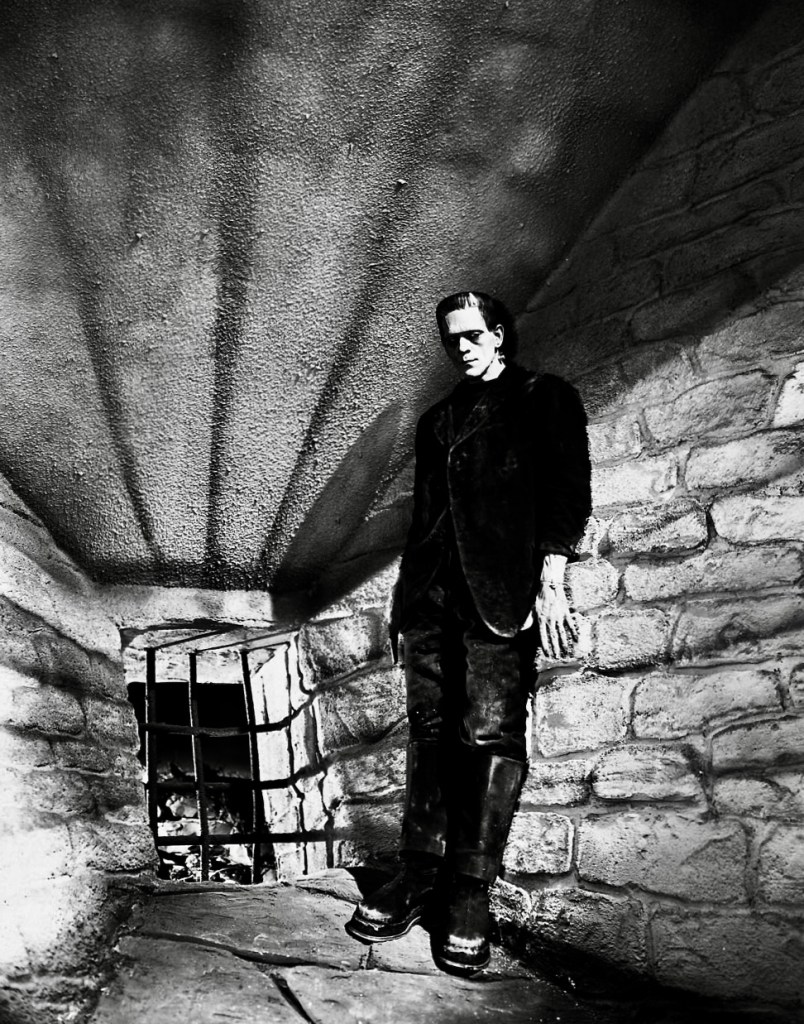
   The day Frankenstein walked into Barron Cannon’s yoga studio in Lakewood, Ohio, Barron could tell he wasn’t a happy monster. He walked as though he had never gotten over the rigor mortis of all his lives and deaths before being resurrected by Victor Frankenstein. He was dirty as all get out and wet. His boots were caked with muck and mire. He needed a haircut and a shave. He looked like he could use ten or twelve square meals all at once

   “You look like hell,” Barron said. 

   “I feel like hell,” Frankenstein said.

   “I thought you were dead and gone, and only alive in the movies,” Barron said. “The story is you killed yourself up on the North Pole after Victor died. That would have been a couple hundred years ago.”

   After being chased and pelted with rocks, flaming stave torches shoved into his face, shot at and thrown into chains, Frankenstein had sworn revenge against all mankind. They hated him so he would hate them. He had hated himself, as well, for a long time.

   “I was going to end it all when I floated off on an ice floe, but I froze solid, and it wasn’t until twenty summers ago that I defrosted.”

   A heartwarming result of global warming, Barron thought to himself.

   “After defrosting I lost track of time,” the creature said. “It’s either all day or all night almost all the time. I built an igloo and learned to hunt seals. I caught and beat their brains out with my bare hands. I meant to go back to Geneva. But after living on the ice safe and sound, I changed my mind. There wasn’t anybody anywhere trying to kill me, which was a blessing. But then I got lonely.”

   “How did you get here?” Barron asked.

   “I walked.”

   “It’s got to be three, four thousand miles from the pole to here. How long did it take you?”

   “I meant to go back to Germany, but I took a wrong turn at the top of the world. Canada looked like Russia until I got to Toronto. By then I didn’t want to turn around. I had been at it for five months. I kept walking until I reached Perry, on Lake Erie. I met a boy and girl there. They were riding pedal go-karts on the bluffs. The girl said her brother was the Unofficial Monster Hunter of Lake County. It was hard to believe. He’s nothing more than a tadpole. When I asked him whether he thought I was a monster, he said I looked monstrous, but was sure I wasn’t a monster.”

   Frankenstein had seen his own reflection in water. He was aware of what he looked like. He didn’t like it any more than passersby did, throwing him wary nervous glances and scuttling away. 

   “Was his name Oliver?”

   “Yes.”

   “You didn’t throw him and his sister down a well, or anything like that, did you?”

   “No, and I’m glad I didn’t. They helped me. They gave me some of their homemade granola bars.”

   “Don’t underestimate the boy. He’s taken on banshees and trolls, the 19 virus, Bigfoot, Goo Goo Godzilla, and the King of the Monsters himself. I don’t know how he does it, but he’s no ordinary child to mess with.”

   “He told me to come here and talk to you, that you were a yoga teacher and could unstraighten me. I’m stiff as a board all the time.”

   “I can see that,” Barron said.

   “I want to be able to touch my toes. I want to be a better man.”

   “I can help you with that,” Barron said. “Except the better person part. That’s up to you.”

   “I was benevolent and good once,” Frankenstein said. “Misery made me a fiend. Make me happy, and I shall again be virtuous.”

   “I’ll do my best.”

   For once, Frankenstein had the feeling he had found a true friend.

   After Barron got back from the Goodwill store with XXL shorts and muscle t’s, pants and shirts, and threw away Frankenstein’s clothes, which hadn’t been washed in centuries, they got started on the yoga mat. Barron told him to get barefoot. When he did the smell was bad. Barron turned on the studio’s fans and opened both the front and back doors. He took the creature’s boots outside and tossed them in the dumpster. The dumpster burped and spit the boots back out. They landed in the parking lot with a clomp. Barron doused them with gasoline and burned them.

   “We’ll start with the twelve must-know poses for beginners,” Barron said.

   Frankenstein had no problem doing the mountain and plank poses, but that was the beginning and end of what he could do. He couldn’t do down dog or a lunge to save his life. Triangle, dancer’s pose, and half pigeon pose might as well have been rocket science. When he tried seated forward fold, he folded forward an inch or two and farted.

   “More roughage in those granola bars than you’re used to?”

   “I lived on seal blubber for a long time,” Frankenstein said.

   He could do some of the hardest poses easily, like headstand. He balanced on his flat head like nobody’s business. He chanted like a champ, his baritone voice deep and rich.. He did dead man’s pose like he was born to it. 

   When the lesson was over, however, he wasn’t able to get up out of laydown. His muscles were in knots. Barron pulled out his Theragun and went to work. It took all the percussion device’s battery power to get Frankenstein on his feet and into the storeroom, where Barron prepared a bedroll.

   “It doesn’t look like you’re in any condition to go anywhere, but make sure you stay here. I have three classes back-to-back-to-back. I don’t want you barging through the door and causing any heart attacks.”

   Frankenstein groaned and rolled over. He slept the rest of the day, that night, and part of the next day. Barron took him to the barber shop next door. Frankenstein had never gotten a haircut. His hair was halfway down his back and his beard down to his belly button. The barber gave him a taper fade crew cut and a shave. He trimmed his eyebrows and the tufts of hair growing out of his ears. He unscrewed the electrodes in the creature’s neck.

   The incisions around his neck, wrists, and ankles had long since healed. Barron found a pair of size 34 sneakers and second-hand bifocals for him. Frankenstein was out of practice, but he enjoyed reading. Barron bought two dozen thrillers, biographies, histories at the Friends of the Library sale.

   Monday morning dawned warmand bright. Barron and Frankenstein walked to Lakewood Park, where they could unroll their mats outdoors on the shore of Lake Erie. Barron had sewn two mats together for the big guy. Barron’s one goal was to make the creature more flexible. His unhappiness with the human race would have to wait. He wasn’t killing anybody anymore, at least. Frankenstein’s problem wasn’t a desk job and never exercising. He wasn’t rigid with chronic tension. He had been on an all-blubber diet for decades but enjoyed the plant-based diet Barron was converting him to. They started having breakfast at Cleveland Vegan. 

   He had never stretched in his life, which contributed to his discomfort and stiffness. His poor muscles were as short as could be. On top of everything else he was close to three hundred years old, counting his own lifetime and the lifetimes of the men he was made of. His synovial fluid was thick as mud.

   Barron and Frankenstein worked on standing forward bend hour after hour day after day. At first the creature could only bend slightly, placing his hands on his thighs. He did it a thousand times. He huffed and puffed. When he was able to touch his knees, he did it two thousand times. He broke out into a sweat. One day Barron brought blocks, setting them up on the high level. Frankenstein folded and got his fingertips to the blocks. The day came when Barron flipped them to their lower level.

   “Don’t be a Raggedy Ann doll, just flopping over,” Barron told him. “Do it right.”

   The gold star moment finally arrived when Frankenstein folded forward without blocks. His upper back wasn’t rounded, his chest was open, his legs were straight, and his spine was long. He was engaged but relaxed. He took several steady breaths as the space between his ribs and pelvis grew.

   “Great job, Frank,” Barron said with encouragement.

   Frankenstein did the pose three thousand times. He was looking lean and not so mean. His skin was losing its yellow luster. He was getting a tan in the sunshine at the park. According to B.K.S. Iyengar, Uttanasana slows down the heartbeat, tones the liver spleen kidneys, and rejuvenates the spinal nerves. He explained that after practicing it “one feels calm and cool, the eyes start to glow, and the mind feels at peace.”

   They walked to Mitchell’s Homemade Ice Cream in Rocky River. Barron had a scoop. Frankenstein had eight scoops. Children gathered around him asking a million questions, asking for his autograph, and asking for selfies with him in the picture. He was a ham with glowing eyes and never said no.

   From standing forward bend it was on to more beginner poses, then intermediate poses. By the end of the month Frankenstein wasn’t a yogi, yet, but he was more human than he had ever been. He joined Barron’s regularly scheduled classes. He was two and three feet bigger than anybody else. Barron put him in a back corner by himself where he wouldn’t accidentally clobber anybody while doing sun salutations.

   When the time came for Frankenstein to move out of Barron’s storeroom into his own apartment, Barron made him a gift of B.K.S. Iyengar’s book “Light on Yoga.”

   “This is the book that will make you a better person, Frank. I’ve read it twice.”

   “I’ll read it a hundred times,” Frankenstein said.

   “What do you plan on doing with your life?” Barron asked.

   Frankenstein thought about becoming a barber like the man who tended to him but bending over the tops of heads all day long would lead to lower back pain sooner or later. He knew full well he had arthritis. He threw that idea away. He thought about becoming a house painter. He could reach more areas compared to a shorter man. He could cut in walls and ceilings without using a ladder. That would save hours over the course of a job. The downside was having to paint low, like skirting boards. Stooping would do a number on his back. He threw that idea out the window, too.

   When he finally decided what to do, he was surprised he hadn’t thought of it earlier. It was a natural. It was how he had been granted a second life. He would be become an electrician.

   An electrician is a tradesman who repairs, inspects, and installs wires, fixtures, and equipment. Much of the job involves installing fans and lights into ceilings. Being tall would free him from the need to go up and down a ladder for every install. It turns the work from a two-man job into a one-very-tall-man job. Homeowners in Lakewood were always restoring and upgrading their houses. He would advertise himself as “Call Frank – He Knows the Power of Electricity and Will Save You Money.”

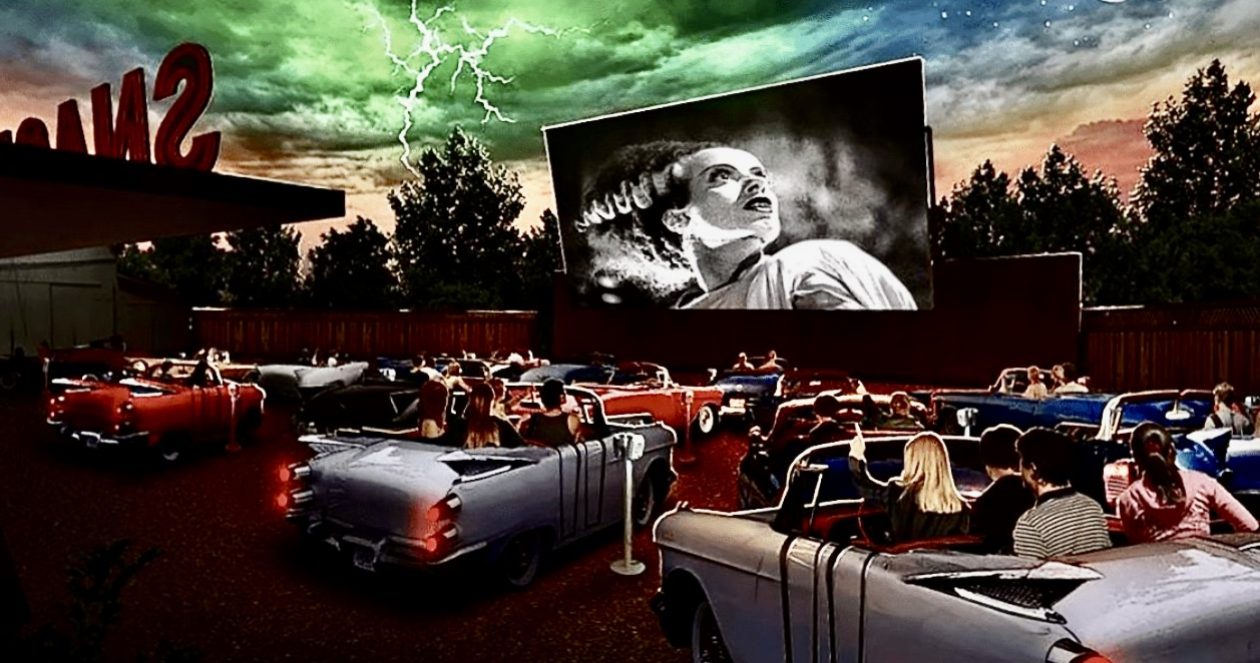
   If he ever made a mistake, he knew he could absorb the bust-up of voltage. He had already been hit with more of the hot stuff than any mortal man and lived to tell the tale. He would look for another Bride of Frankenstein, too, a nice girl with a slam-bam bolt of lightning in her hair. They would make little Frankie’s.

Ed Staskus posts monthly on 147 Stanley Street at http://www.147stanleystreet.com, Made in Cleveland http://www.clevelandohiodaybook.com, Down East http://www.redroadpei.com, and Lithuanian Journal http://www.lithuanianjournal.com. To get the site’s monthly feature in your in-box click on “Follow.”

“Ebb Tide” by Ed Staskus

A Prince Edward Island Thriller

“A stem-winder in the Maritimes.” Sam Winchell, Beyond Fiction

Available at Amazon: https://www.amazon.com/dp/B0CVDP8B58

Summer, 1989. A small town on Prince Edward Island. Mob money on the move gone missing. Two hired guns from Montreal. One RCMP constable stands in the way.

A Crying of Lot 49 Publication

Buckle Hat Hurley

By Ed Staskus

   “Are you OK mister?” Oliver asked, standing in the middle of his backyard, looking at a small man laying at his feet. It was early in the morning. The rising sun was behind him. A slight rain was falling in front of him. He was between the sunshine and the rain.

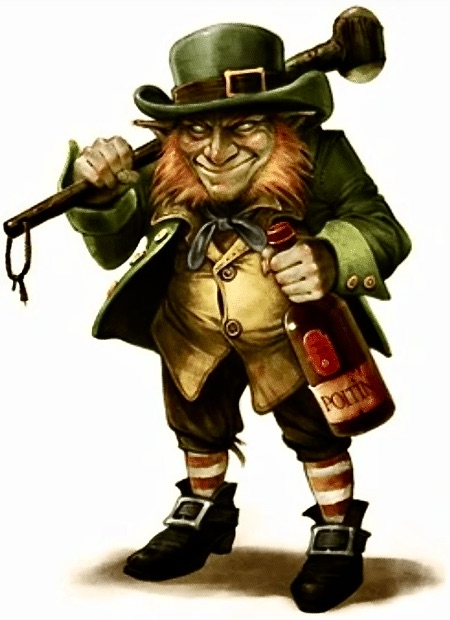
   After a minute went by and there was no answer, he asked the small man again. There was no answer again. Oliver took a closer look at him. He was wearing a buckle hat and breeches. The hat was green and the shoes were black. His breeches were caked with dirt and his sideburns were orangish. The man was flat on his back. He was out cold. A shillelagh was on the ground beside him. He was pint-sized, about Oliver’s size. Oliver got down on his haunches and put his ear near the man’s open mouth. When he heard and felt breathing he felt better. The man was alive, although his breath was foul to the nose. 

   “Mister, are you all right?”

   The small man gurgled in his sleep and shooed away an imaginary fly. Oliver shook the man by his shoulder. Nothing happened. He tried again. Nothing happened again. The third time was the charm, but what happened wasn’t charming. The small man sat bolt upright, hopped to his feet in a flash, and had Oliver in a headlock the next instant.

   Even though Oliver was only nine years old, he knew a thing or two about self-defense. He reached for the small man’s free arm and trapped it between their bodies. He put one foot behind the man and pushed. They both started to fall.  Oliver quickly ducked underneath the head-locking arm and in two seconds flat was behind his assailant. He locked the man’s arm behind his back. They both tumbled to the  ground. When that happened, the small man started snorting and laughing.

   He laughed so much Oliver thought he might choke. He released his arm-lock. Eventually the laughing went its merry way.

   “I will tell you, boyo, nobody has never done that to me. I tip my hat to you.” He reached up and tipped his hat.

   “Who are you?”

   “I’m a leprechaun today, hungover tomorrow, don’t you know?”

   “How did you get here?”

   “Where is here?

   “Perry.”

   “Perry?”

   “Near Painesville.”

   “Painesville?”

   “Near Cleveland.”

   “Now that’s something I do remember, the big parade on St. Patrick’s Day. It’s all a blur after that.”

   “You don’t remember?”

   “I don’t remember anything after the parade except drinking beer in one local after another.”

   “Local?”

   “Where you go to drink beer.”

   “Oh.”

   “All right then, I better be on me way, although I am a wee bit famished.”

   Oliver went into the kitchen and returned with buttered toast, hard boiled eggs, and a bottle of water. The leprechaun chomped on the toast and devoured the eggs. He gave the water a scornful glance.

   “I’ve never met a leprechaun before,” Oliver said. “Do you know Lucky the Leprechaun?”

   “Who’s he?’

   “He’s on every box of Lucky Charms cereal.”

   “Never heard of him.”

   “I was at the St. Patrick’s Day parade yesterday. I didn’t see you.”

   “I didn’t see you either.”

   Oliver and his sister Emma, who was his right-hand man when it came to monster hunting, had been at the parade with their parents and their friend Tommy One-Shoe. The first St. Patrick’s Day parade in Cleveland was in 1842. Since then, all the other big holiday parades in town had come and gone. There wasn’t a Fourth of July or Thanksgiving or Christmas parade anymore, although there was a Turkey Trot. The only one left was the parade in mid-March.

   “Why do you have a little hammer in your back pocket?” Oliver asked.

   “That be my pattern hammer. I’m a shoemaker the same like all leprechauns. We repair shoes for the fairies, who are dancing fools. When they wear their shoes out we make new ones for them. It keeps us busy, believe you me. That’s how we fill our treasure crocks.”

   “What are those?”

   “Our pots of gold.”

   “What do you do with all your gold?”

   “There’s no place for us to spend it so we don’t do anything with it, except avoid big ‘uns who want to get it. They think greed is good. We teach them it’s not good, although they never stop trying to outsmart us. One time a townsman had me dead to rights and would only let me go if I told him where my gold was buried. I pointed to a tree in a field behind him. He took his red suspenders off and tied them around the tree. When he left to get a shovel I disappeared, although I left some of my magic behind. When he got back there was a surprise waiting for him. There were red suspenders tied to every tree in sight.”

   “Where do you come from?”

   “I be from the 8th century.”

   Back in the day leprechauns were water spirits called “luchorpán,” which means small body. The spirits started to befriend household fairies a few centuries later so they could get into cellars where drink was stored. After they tasted the drink they never went back to water. That was when they turned into leprechauns. 

   “Where do you live?”

   “I don’t live anywhere, but where I lay my head is far away.” They didn’t like living in houses, sleeping in caves and hollow tree trunks instead.   

   “Do your friends and family miss you?”

   “No, we be solitary creatures. No friends and no family. I don’t even know if there are or ever were girly leprechauns. There aren’t many of us left, maybe three hundred or so in all of Ireland. It’s gotten so the European Union put us on their protected species list, like we are butterflies or some such thing.”

   “Do you want to stay at our house?” Oliver asked. “We could find a hollow tree trunk for you and we have plenty more toast and eggs.”

   “Thanks laddie, but I needs to be getting back.”

   “How are you going to find your way?”

   “That be easy as raisin pie,” the leprechaun said, pointing skyward. “I look for a rainbow and follow it. My treasure crock lays at the end of the rainbow.”

   It was raining lightly in the direction they were looking.

   “If you want a rainbow, you have to put up with the rain,” the leprechaun said. A rainbow needs water droplets to be floating in the air. That’s why we see them right after it rains. The sun must be behind you for the rainbow to appear in front of you.

   The one they were watching was coming out of the ground on the far side of the Church of Jesus Christ which stood on the near side of Oliver’s backyard. They walked past the house of worship. Oliver didn’t see the small man spit when they passed the Protestant church. When they found the fountainhead of the rainbow they stopped and the leprechaun stood on the spot. The spot was glowing a golden color. The leprechaun started to spin where he stood until like a drill he drilled into the firmament and soon enough was lost to sight.

   Oliver crept to the edge of the hole and cautiously looked down into it. It seemed like he could see to the center of the planet. The leprechaun had disappeared off the face of the earth. When Emma came out of the house to see what was going on, Oliver said, “ I better ask dad to fill up this hole with some dirt before somebody falls in and is gone without a trace.”

Ed Staskus posts monthly on 147 Stanley Street http://www.147stanleystreet.com, Made in Cleveland http://www.clevelandohiodaybook.com, Atlantic Canada http://www.redroadpei.com, and Lithuanian Journal http://www.lithuanianjournal.com

“Cross Walk” by Ed Staskus

A Mid-Century Crime Thriller

“A once upon a crime whodunit.” Barron Cannon, Adventure Books

“Captures the vibe of 1950s NYC.” Sam Winchell, Beyond Fiction

Available on Amazon: https://www.amazon.com/dp/B0CRPSFPKP

Late summer and early autumn. New York City. A Hell’s Kitchen private eye. The 1956 World Series. President Eisenhower at the opening game. A killer in the Brooklyn Dodger dugout.

Mandrake and the Camel

By Ed Staskus

   The first thing the Camel did was head for the back door, being the back door man he was, until he saw Oliver and Emma guarding it. At first, he thought it was some kind of trick Mandrake the Magician had dreamed up. The do-gooder didn’t in his wildest dreams think a couple of pre-teens were going to stop him and his daughter, the Brass Monkey, from escaping the Kirtland Temple and making off with the diamond they had stolen, did he? 

   But then the Camel quickly reconsidered. Mandrake wouldn’t have stationed them there if they were just helpless kids, would he? He asked his daughter. She was puzzled, too, but finally blurted out the kids might be even more dangerous than Mandrake and Lothar. At least they knew what powers the magic man and his African sidekick had, but they didn’t know what the kids had going for them. The Camel didn’t like facing the unknown when it was in his face.

   He and the Brass Monkey ran back up to the top of the tower, When they looked down neither Mandrake nor Lothar were where they had been in front of the front door only a minute earlier. The door was wide open. The Camel realized it was only a matter of a minute before his archenemies barreled out onto the widow’s walk and when that happened there would be hell to pay. He quickly summoned his Three Stooges with special hocus-pocus. They were standing in front him in a flash.

   The Three Stooges were hard men with hard faces. The only candy they ever ate was hard candy. One of them had his teeth professionally polished. They gleamed when he smiled. The other two men never smiled. They didn’t believe in it. They believed in knocking down fairy castles. They didn’t argue their enemies to death with talk.

   No matter how many times the Camel insisted they call him the Master, they refused to do it. The goons called him the Boss and that was that. Two of them were wearing fedoras with contrasting bands. One was hatless. Two of them were carrying handguns. One of them had a .45 Colt and another one had a Colt Officers Special. He had stolen it from a policeman. The hard man wearing a black shirt and green tie was old school. He was carrying a slapper, a leather pouch filled with lead pellets. It was small enough to hide in a sap pocket but big enough to break bones with no trouble.

   Mandrake and Lothar strode up the down stairs. The stairs were worn down by time. Their minds were made up. The walls were yellow. When they burst into the open the Three Stooges went to work. The one with the slapper hit Lothar in the face with it as hard as he could, hard enough to buckle the knees of an elephant. Lothar blinked and took the slapper away from the man. He said something the man couldn’t understand. The next thing he knew Lothar was tucking the slapper back into his sap pocket, lifting him over his head, and throwing him off the widow’s walk. He hit the ground like a sack of radishes and stayed where he landed.

   When Oliver and Emma raced to the side of the church, the dust of him hitting the ground was just settling. They checked the man’s pulse. He had one, although at the moment it was going at the speed of a snail. They raced back to the rear of the church.

   “He must have had an accident, don’t you think?” Emma asked her brother.

   “Whatever happened, I don’t think it was an accident,” Oliver told his sister. The next second they heard  gunfire from the temple’s tower. “That is definitely no accident,” Oliver said. The noise was followed by silence. The next thing they knew two guns came flying downwards and thudded on the ground.

   The Two Stooges with handguns had emptied them at Mandrake and Lothar.  The African sidekick caught all the bullets with his fingers. When he had a handful of them he threw them up in the air where they turned into crows and flew away. Mandrake waved his hand and the two men were instantly hypnotized. “Go,” the magician ordered them. They jumped off the widow’s walk and joined the other hard men on the dusty ground. 

   “I didn’t expect them to do that,” Mandrake said.

   When Mandrake spotted the Camel and Brass Monkey he and Lothar gave chase. The chase led them round and round the widow’s walk. They kept their quarry in sight but couldn’t gain any ground. Everybody went round and round until Mandrake stopped and quietly raised his hand. Lothar stopped. The Camel stopped. The Brass Monkey, who had been running behind her father, ran into him.

   Mandrake gave Lothar the high sign to go one way while he went the other way. In an instant they had the wrong doers in a pickle. There was nowhere for them to go. The Camel threw smoke bombs in all directions but the devil-may-care breeze coming off Lake Erie blew the smoke away.  The Brass Monkey did a funny little jig but the crime fighters weren’t distracted. She stuck her tongue out at them.

    “Mind your manners,” Mandrake said.

   “I don’t mind that you don’t like my manners,” the Brass Monkey said. “I don’t like them myself.”

   “I’m sorry for putting you and the African to all this trouble,” the Camel said.      

   “You don’t seem sorry to me,” Mandrake said.

   “I am sorry,” the Camel said. “Sorry I got caught.”

   “First things first,” Mandrake said. “I will have that diamond.”

    “I’ve been rich and I’ve been poor. Believe me, rich is better. I am keeping the diamond.”

   Mandrake was tired of messing around. He pointed at the Camel’s vest pocket. The diamond jumped out of the pocket and flew into Mandrake’s hand. He tucked it away for safekeeping. He faced the Camel and Brass Monkey.

   “Now that we are all agree the diamond is going back to its rightful owner, the only question is what to do with the two of you.”

   “I wish I had a friend to help me,” the Camel said. “Except they’re never around when you hit the skids.”

   Lothar whispered something in Mandrake’s ear.

   “Good idea,” Mandrake said. He extended his arm and in an instant the Camel and Brass Monkey were walking down a wet dead-end street. It didn’t take them long to realize the more they walked the more they got nowhere. The dead-end was always in front of them. Their shoes got soggy. When they tried to turn around they discovered they couldn’t. It was going to be a long unhappy walk.

   Outside the church Oliver and Emma joined Mandrake and Lothar. They looked down at the Three Stooges lying in a pile near the front of the Kirtland Temple.

   “What are you going to do with them?” Emma asked.


   Lothar didn’t have sleeves but he had a few magic tricks up his sleeve. He recited a Dark Continent incantation and snapped his fingers. The Three Stooges stood to attention and transformed into Mormons. They started going door to door in the direction of Salt Lake City peddling copies of the Book of Mormon.

   “Mom isn’t going to like it if they come to our door,” Oliver said. “She’s liable to give them a good piece of her mind.”

   “More like a bad piece of her mind,” Emma said.

Previously: Mandrake on the Move

Ed Staskus posts monthly on 147 Stanley Street http://www.147stanleystreet.com, Made in Cleveland http://www.clevelandohiodaybook.com, Atlantic Canada http://www.redroadpei.com, and Lithuanian Journal http://www.lithuanianjournal.com

A New Thriller by Ed Staskus

Cross Walk

“A once upon a crime whodunit.” Barron Cannon, Adventure Books

“Captures the vibe of mid-century NYC.” Sam Winchell, Beyond Fiction

Available on Amazon: https://www.amazon.com/dp/B0CRPSFPKP

Late summer and early autumn. New York City. A Hell’s Kitchen private eye. The 1956 World Series. President Eisenhower at the opening game. A killer in the dugout.

Mandrake on the Move

By Ed Staskus

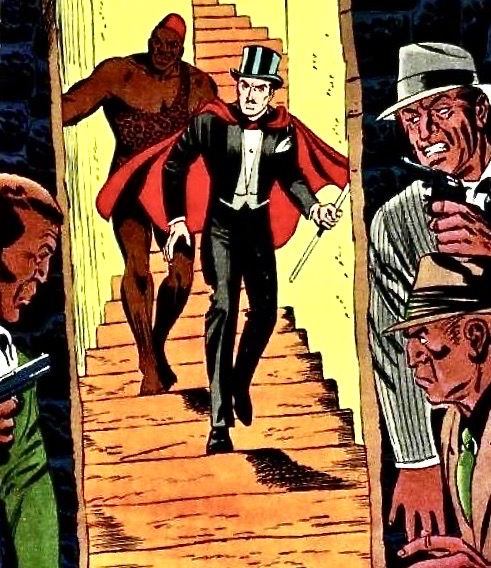
   Mandrake the Magician wasn’t as big as his sidekick Lothar but was bigger than he looked in comic books and newspapers. He looked like a man from another time. He wore a tuxedo, a cape, and a top hat. Oliver had met him once and wasn’t deceived by his get-up or unfashionable pencil lip mustache. 

   Donnie had never met him and was merry with disdain about the mustache. “What is that dead caterpillar doing on your face?” he said and laughed at his own joke. Nobody else laughed. Lothar glowered. Emma was appalled. Oliver was worried about what Mandrake might do. What the magician did was wave a hand and Donnie was instantly hypnotized.

   “Repeat after me,” Mandrake said. “I like Mandrake’s mustache.” The magic man snapped his fingers and Donnie came out of his trance.

   “I like your mustache, Mr. Mandrake,” he said.

   “Thank you, young man,” Mandrake said.

   Donnie reached for a Ho-Ho. He always had one within easy reach. He bit into the cylindrical morsel. It tasted better than ever.

   “Yum,” he murmured, his voice soft as a mourning dove.

   “Can you hypnotize Donnie about Ho-Ho’s, so he doesn’t eat them anymore, so he can lose some weight?” Oliver asked.

   “It’s the least I can do,” Mandrake said. He waved his hand again and Donnie again fell under his spell. The Ho-Ho in his hand fell limply to the ground. When he looked at it, it looked lonely on the ground/

   “From this moment, whenever you see a Ho-Ho, you will throw it to the ground and walk away. Do you understand?”

   “Yes, master,” Donnie said.

   Mandrake the Magician snapped his fingers and Donnie came to his senses, He reached into his pockets and began throwing Ho-Ho’s in all directions until he didn’t have anymore. He hung his head and let out a sigh.

   “About what we discussed on the phone,” Mandrake said to Oliver. “You say you suspect the Clay Camel and the Brass Monkey are in these environs committing thievery?”

   Oliver showed him the clay camel Donnie had found.

   “Once more the world’s cleverest thief and the world’s greatest master of disguise has left his clay camel at a crime scene,” Mandrake said. He handed the figurine to Lothar, who said something nobody but Mandrake understood. Lothar was one of the strongest men in the world but his English was horrible. Mandrake and he were best friends. One time, when an imposter claiming to be Lothar tried to take over his African homeland, Mandrake and Lothar went back to the Dark Continent to apprehend the imposters and restore order. They didn’t hold back. They got the job done. They were Number One when it came to getting it done.

   “What is this penguin going to do about my mom’s diamonds?” Donnie asked. The Ho-Ho sugar bombs were wearing off and he was feeling petulant. “He looks like he’s going to a fancy party.”

   “Mandrake stopped the Cobra from stealing the Crystal Cubes and taking over the world,” Oliver said. “He stopped Baron Kord from using his brain-washing chemicals to turn everybody into Kordies, mindless men and women whose only purpose would have been to follow orders. When his father Theron and the Magic School were attacked by invaders, he and Lothar came to the rescue and threw the invaders out of Tibet. He saved his girlfriend Princess Narda from the Mirror World. He went to the Netherworld and arrested the Mole. He stopped his twin brother Derek from using his powers for evil and when he tried again, he stripped Derek of his powers for good. If anybody can find your mom’s diamonds, it’s Mandrake.”

   ”I need a Ho-Ho,” Donnie complained in spite of himself.

   Mandrake had heard enough. He waved his hand and Donnie fell into a deep sleep. He waved his hand again and Donnie was teleported into his bed at home, where he spent the rest of the afternoon snoring, dreaming, and building chocolate castles in the air.

   “Where were we?” Mandrake asked.

   “The Clay Camel and the Brass Monkey,” Emma said helpfully.

   “Right you are, young lady,” Mandrake said. “Finding them isn’t going to be a problem. What is going to be a problem is getting our hands on them. The second we reach for him he will change his appearance and melt away. He is slippery as an eel. The Brass Monkey isn’t as slippery, but if she holds on to the Camel’s coattails, she will melt away just like him.”

   “How are you going to find him?”

   “I will find him with my Fortune Globe.”

   The Fortune Globe was the size of a billiard ball, clear and glossy. Lotar rubbed it vigorously and held it in the palms of his open hands. Mandrake the Magician leaned over his friend’s hands, studying it intently.

   “The Camel and the Monkey are hiding in the tower of the Kirtland Temple, which means they are ready to fall into our hands.” 

   “What do you mean?” Oliver asked.

   “From up in the tower, there is only one way for them to go, and that is down. On top of that, since the Temple closes soon, no matter what they disguise themselves as, there will only be the two of them. There isn’t anybody else there. We won’t have to pick them out of a crowd.” All the Mormons had gone to Utah long since.

   The church was 15 minutes away by car, but nobody in the crew knew how to drive. None of them had a car, anyway, even if they took driving lessons immediately. Mandrake had his own mode of travel. He and Lothar, Oliver and Emma, made a tight circle, holding hands. Mandrake softly spoke an incantation and the next second they were in the parking lot of the Kirtland Temple. 

   It was on a bluff overlooking the Chagrin Valley. It was built in the 1830s and dedicated in 1836 as a House of Prayer, Learning, and Order. It was the first Mormon Temple in the United States. The two-story church was white as white ever was, although it hadn’t always been. The Latter Day Saints had painted it blue gray back in the day. The roof had been red and the doors green. A thousand faithful gathered on the morning the doors opened, singing “The Spirit of God Like a Fire is Burning.” The preacher said a prayer, gave a speech, and was visited by Adam, Abraham, and several angels. Church leaders spoke in tongues in case anybody in the audience didn’t understand English.

   The lantern tower was on top of the roof, at the front of the church. There was a widow’s walk where the Camel and Brass Monkey were lurking, looking down on them. The Camel’s mouth was twisted with malice. The Brass Monkey’s mouth was red with lipstick. She sneered and flipped Mandrake the bird. The magician gave the bird the back of his hand and it flew away.

   “Watch the back door,” Mandrake told Oliver and Emma. The children took up their post. Mandrake spoke to his enemies, both father and daughter alike. “I am coming up to cut you down to size,” he said.

   “We have our rights,” the Camel shot back.

   “You have the right to remain silent,” Mandrake the Magician said, striding purposefully towards the front door, Lothar hard on his heels. Right and wrong was going to have it out.

Previously: Making Up Mandrake

Next: Mandrake and the Camel

Ed Staskus posts monthly on 147 Stanley Street http://www.147stanleystreet.com, Made in Cleveland http://www.clevelandohiodaybook.com, Atlantic Canada http://www.redroadpei.com, and Lithuanian Journal http://www.lithuanianjournal.com

A New Thriller by Ed Staskus

Cross Walk

“A once upon a crime whodunit.” Barron Cannon, Adventure Books

“Captures the vibe of mid-century NYC.” Sam Winchell, Beyond Fiction

Available on Amazon: https://www.amazon.com/dp/B0CRPSFPKP

Late summer and early autumn. New York City. A Hell’s Kitchen private eye. The 1956 World Series. President Eisenhower at the opening game. A killer in the dugout.