Tag Archives: Monster Hunters of Lake County

Making Up Mandrake

By Ed Staskus

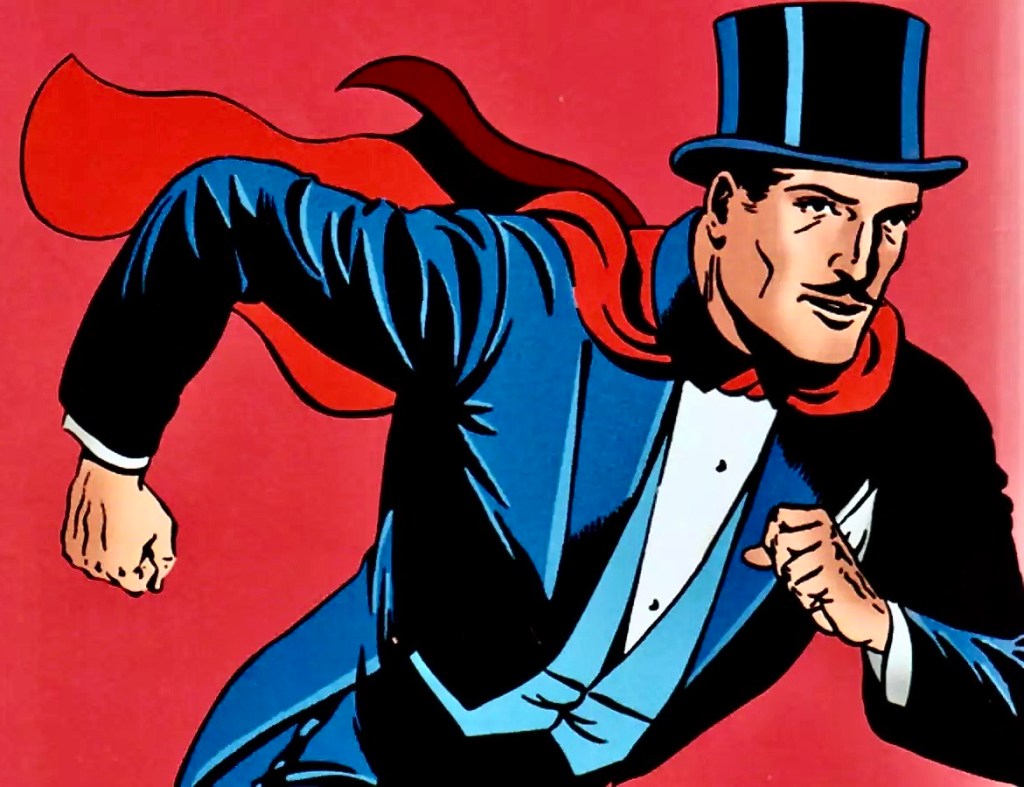
   When Oliver’s friend Donald turned ten his parents threw a birthday party for him and hired a magician to entertain the kids. The magician wore a black tux, a black cape with a red lining, a black top hat, and carried an ebony stick that was a gadget cane. Everybody at the party was mesmerized by his tricks. He called himself Mandrake the Magician. 

   Some of Donald’s so-called friends called the birthday boy Dumbo. He was on the chunky side, teetering on the edge of fat. His friendlier friends called him Donnie and suggested he stop eating Ho-Ho’s, which were frosted cream-filled cakes. He had either just eaten one or was planning on eating another one. He had an effigy of Happy Ho-Ho, the mascot of the snack, in a special place in his bedroom. Happy looked like Robin Hood, fit and trim, including a feathered hat. Donnie thought if he ate just one more Ho-Ho he would presto chango look just like Happy. No matter how hard he tried, though, he looked more chunky every day.

   The day after the party Donnie’s mother asked if he had seen her diamond necklace. She said it was missing. Donnie didn’t even know his mother had a diamond, much less a necklace of them. She said she kept it under lock and key in an organizer case on a shelf at the back of her closet.

   “The necklace case is still there, but the necklace is gone,” she said. “I don’t understand it. The box is still locked but my diamonds are gone.”

   The Perry police couldn’t make heads or tails of it. The house didn’t appear to have been broken into. The box didn’t appear to have been broken into. The only fingerprints on the box were those of Donnie’s mother. There were no clues whatsoever. They were stumped. They wrote a report and went back to the station to wait and see if anything developed.

   Donnie went to see Oliver on Sunday. Oliver was the Unofficial Monster Hunter of Lake County. He dabbled in solving crimes, too. When Donnie got there he saw that Oliver’s dad was barbequing. He invited himself to the picnic table and stayed the rest of the afternoon. The children put their heads together after finishing their hot dogs and slaw.

   Emma had joined Donnie and Oliver when she smelled the pigs in a blanket ready for mustard. She was Oliver’s older sister and right-hand man. She claimed to be the brains of the operation, much to her brother’s displeasure. She had been at Donnie’s birthday party with him. She was puzzled by the theft. There weren’t many cat burglars stealing gemstones in their neck of the woods.

   “When did your mom last see the necklace?” Emma asked.

   “Mom said she cleaned it the day before my party.”

   “When did she notice it was missing?’

   “The day after the party.”

   “That means it was stolen the day of the party,” Emma said. “Did you see anybody sketchy at your house that day?”

   “No, just my friends,” Donnie said.

   “Nobody more fishy looking than them?”

   “The magician was sort of fishy looking,” Donnie said.

   “I think that might be it,” Oliver said. “I don’t think he was the real Mandrake the Magician, at all. Real magicians are the most honest people in the world. They tell you they are going to fool you, and then they do it. I think it must have been the Clay Camel. If it was, he is the man who stole your mom’s necklace.”

   “Who’s the Clay Camel?

   “He is Saki, who is a master thief and a master of disguise. He’s a bad seed and a bad dude, too. Money means everything to him. He can change his appearance in seconds. I’m sure he pretended to be Mandrake.”

   “Before we get into the weeds, who is Mandrake the Magician, anyway?” Emma asked.

   “He used to be a stage magician about a hundred years ago,” Oliver said. “Then he started battling crime and injustice. He fights gangsters, mad scientists, and creatures from outer space. His hat, cloak, and wand were passed down to him by his father. His father’s name is Theron. He runs the College of Magic in the Himalayas. The Mind Crystal, which he is the guardian of, keeps him and Mandrake going strong. Mandrake can shape shift, levitate, and teleport. He is the fastest hypnotist in the world. All he has to do is gesture and his enemies see illusions. He lives in Xanadu, a mansion on top of a mountain in northern New York, near Canada. He doesn’t need anybody’s diamonds, that’s for sure.”

   “What about this Clay Camel character” Emma asked.

   “He’s a member of 8, which is a crime organization a thousand years old. Whenever they commit a crime, they leave the number 8 behind as a marker so everybody knows they did it. Saki leaves his own mark, which is a little clay statue of a camel. Did you see anything like that.”

   “My mom showed me a clay camel after the party,” Donnie said. “She thought it was mine. I thought somebody forgot it when they left.”

   “Now we know it was Saki, for sure,” Oliver said. “He’s going to be a tough nut to crack, especially if he has his daughter with him, which he probably does, since she loves everything shiny and expensive.”

   “My golly, he has a daughter?” Emma exclaimed in surprise.

   “Her name is Brass Monkey. She has faster fingers than even her father.”

   “How are we going to find them and get my mom’s diamonds back?” Donnie asked.

   “Maybe the real Mandrake could help?” Emma wondered out loud. “Do you have his phone number?

   “I have it somewhere,” Oliver said. He ran upstairs to his bedroom. He didn’t have a filing system, or any organizational system, at all. He scribbled things on scraps of paper and stuffed them into drawers. It usually took days to find anything. It drove Emma crazy. He finally found Mandrake’s phone number and ran back downstairs.

   “Where have you been?” Emma asked, exasperated at how long it had taken. “Donnie has eaten a half-dozen Ho-Ho’s already.”

   Neither Emma nor Oliver had a cellphone. They weren’t allowed. Donnie had one, though. Oliver borrowed it and stepped to the side. He called Mandrake the Magician. After a few minutes he stepped back to the picnic table.

   “He said he would teleport himself here in a few minutes.”

   Five minutes late there was a whoosh and a sudden burst of smoke under the cell tower at the far end of their backyard. A man in a black tux and cape and another man with black skin stepped out of the smoke cloud.

   “I brought Lothar with me,” Mandrake the Magician said. “He’s always a big help.”

   Lothar was Mandrake’s best friend and crimefighting partner. He had once been the Prince of the Seven Nations, an African federation of jungle tribes. He was invulnerable to most weapons under the size of a cannon, unaffected by heat and cold, and had the stamina of a hundred men. He could lift an elephant with one hand. No spells, incantations, or force bolts could hurt him. He wore a purple fez, short pants, and a leopard skin. He didn’t say much. Besides, his English was horrible.

   “Thanks for coming, the both of you. We need all the help we can get,” Oliver said.

   “Let’s get to it,” Mandrake the Magician said.

Next: Mandrake on the Move

Ed Staskus posts monthly on 147 Stanley Street http://www.147stanleystreet.com, Made in Cleveland http://www.clevelandohiodaybook.com, Atlantic Canada http://www.redroadpei.com, and Lithuanian Journal http://www.lithuanianjournal.com

A New Thriller by Ed Staskus

Cross Walk

“A once upon a crime whodunit.” Barron Cannon, Adventure Books

“Captures the vibe of mid-century NYC.” Sam Winchell, Beyond Fiction

Available on Amazon: https://www.amazon.com/dp/B0CRPSFPKP

Late summer and early autumn. New York City. A Hell’s Kitchen private eye. The 1956 World Series. President Eisenhower at the opening game. A killer in the dugout.

Small Miracles

By Ed Staskus

   “What are you going to do with that?” Emma asked Oliver.

   “I’m going to shrink monsters with it from now on and take them away in my new paddy wagon,” Oliver said. “That way I won’t have to worry about what to do with them. Mom says Godzilla almost ate us out of house and home when he made all that trouble the last time and then slept over. When they are tiny I can feed them crumbs.”

   Emma looked at the toy police paddy wagon that was maybe big enough for a chipmunk. It was made of tin. It had red wheels and looked like it came from another century.  She burst out laughing.

   “What’s so funny?” Oliver asked.

   Oliver hunted monsters up and down Lake County. Emma was his older sister. They lived in Perry, Ohio with their parents. Both of them were taking piano lessons because their dad wanted them to. Both of them were well behaved most of the time because their mom said so. She had a severe strain to her that was not to be messed with. Both of them went to grade school Monday through Friday because the authorities of their town, the town of Perry, said so. Sometimes grown-ups were a bane to small fry.

   “You’re making some kind of ray gun that will shrink monsters? I don’t think so!”

   Since their mother wasn’t home at the moment, they got into a battle royal on the spot. They wrestled and fell off the sofa. They rolled back and forth on the carpet. Their cats, Sylvester and Son of Sylvester, wandered into the living room, took one look, and went the other way. They knew better than to get in the middle of a free-for-all between the two of them. The difference of opinion ended when they heard their mother pulling into the driveway. They were sitting quietly doing nothing when she walked in. She could tell she had interrupted something, but didn’t say anything other than, “Have you finished your homework?”

   Neither of them had even started. They trudged off to their bedrooms and put their noses to the grindstone. They were almost done by the time their mother called them downstairs for dinner. Their father was out of town on an inspection of an oil refinery in St. John’s, New Brunswick. He was an electrical engineer who specialized in oil refineries.

   “What are you going to do when cars don’t need gasoline anymore?” Oliver asked him one day.

   “I’ll cross that bridge when I get to it.” His father had a way of answering questions without answering them.

   “Are you going to go find that bridge in one of those Tesla’s like mean Mr. Efflux next door has got?”

   “He’s not a mean man, as long as you don’t unplug his car five minutes after he plugs it in.” 

   Mr. Efflux was a middleman. He prided himself on never being late to work. He wasn’t happy the morning his car ran out of juice four miles from home, stuck on the side of the road with no outlet in sight.

   Three days later it was early Saturday morning. Oliver’s father had gotten home late on Friday night and was sleeping in. Oliver’s mother was visiting their grandmother and helping her rake up the dregs of last fall’s leaves. Oliver was at the work table his father had set up for him in a corner of the garage. Emma walked in shaking the sandman out of her eyes.

   “What are you doing now?” she asked.

   “Wouldn’t you like to know, smarty pants!”

   When the spat was over, and they were catching their breath leaning on the work table, 

after they had put everything back where it belonged, Oliver showed Emma the ray gun he was working on.

   “That’s just one of your old squirt guns,” she said.

   “That’s what I want it to look like,” Oliver said.

   “How does it work?”

   “Oh, that’s easy, you just point it at whatever you want to shrink and pull the trigger.”

   “No, silly, how does it really work?”

   “Do you mean, how does it work or how does it really work?”

   Oliver and Emma went around in circles for a few minutes until they finally circled back to the red squirt gun that was going to be a ray gun soon. It didn’t look like much and Emma said so with a sniff. Oliver fiddled with it while Emma watched. He tightened a couple of screws, adjusted the sighting, and wiped off some spit that had landed on it during their scuffle.

   “Are you going to shrink all the monsters?”

   “No, only the ones who won’t listen to reason. The rest can go their own way.”

   “Whose reason?”

   “My reason.”

   “Where are you going to put the ones you shrink, after you have got them in your paddy wagon?”

   “I am going to build a small jail. I might build a small halfway house, too.”

   Oliver and Emma worked on the ray gun all morning. They thought they finally had it ready to go when noon rolled around. Their mother had come home and called them to lunch. The cats drifted out to the garage to see what they had been doing. Oliver and Emma shooed them away after they finished their seed butter cracker sandwiches and were back in the garage. They were ready to test the ray gun.

   “What are we going to shrink?” Emma asked.

   They looked around. There were no monsters anywhere. They walked up and down their neighborhood, as far as the Perry Cemetery, and down to the Grand River. It was a cool sunny day, crisp as a spring day could be. Tommy One Shoe joined them on their way home.

   “What are you working on?” he asked, stepping up to the work bench and eyeballing the red plastic squirt gun.

   “It’s a ray gun. It shrinks monsters down to size.”

   “I want dibs on it so I can cut my older sisters down to size,” Tommy said.

   “We have to test it first,” Oliver said.

   “Make sure you don’t point that thing at me.” Tommy didn’t want to be that day’s crash test dummy.

   “It might be better to test it on a thing rather than on a somebody,” Emma said. She was Oliver’s voice of good sense.

   “That’s probably a good idea,” Oliver admitted. “What can we test it on?”

   They stepped onto the apron of the driveway next door to their house. What they saw was Mr. Efflux’s Tesla in the driveway. The three children circled it. They agreed shrinking a neighbor’s house was out of the question. The neighbor might be inside it. The car seemed to be their best bet. Oliver unraveled an extension cord and plugged the ray gun in. He flipped the switch on, aimed, and pulled the trigger. There was a crackling hum like electricity on fire. The Tesla quivered and glowed and in a second shrank to the size of a matchbox car.

   “It works!” Oliver exclaimed. He ran and got his police paddy wagon. He slid the Tesla inside it. The little car fit perfectly. Oliver was beside himself. He and Tommy exchanged high fives.

   “We better get it back to what it was before Mr. Efflux sees what we’ve done,” Emma said.

   Oliver licked his lips. “I haven’t exactly thought that part through. I don’t know how to change it back, at least not yet.”

   “Oh, oh,” Tommy said and immediately went home.

   “What are we going to do?” Emma asked.

   Oliver rummaged around his tool box and found a 9 volt battery. He connected it to the little Tesla. Mr. Efflux wouldn’t be able to get inside the car, of course, but it would at least still run. Oliver put it back in Mr. Efflux’s driveway. A baby worm crawled underneath it to catch some shade.

   “Small miracles are better than nothing,” Oliver said as he and Emma ran back inside their house and locked the door before Mr. Efflux had to go somewhere in his car.

Ed Staskus posts monthly on 147 Stanley Street http://www.147stanleystreet.com, Made in Cleveland http://www.clevelandohiodaybook.com, Atlantic Canada http://www.redroadpei.com, and Lithuanian Journal http://www.lithuanianjournal.com

A New Thriller by Ed Staskus

Cross Walk

“A once upon a crime whodunit.” Barron Cannon, Adventure Books

“Captures the vibe of mid-century NYC.” Sam Winchell, Beyond Fiction

Available on Amazon: https://www.amazon.com/dp/B0CRPSFPKP

Late summer and early autumn. New York City. A Hell’s Kitchen private eye. The 1956 World Series. President Eisenhower at the opening game. A killer in the dugout.

The End of Jim Stubbs

By Ed Staskus

   “We have got to hurry,” Lucky Legs said. “Once the sun comes up out of the eastern ocean he will be impossible to see in the daylight.” The 19th century Boston man picked up the pace. Oliver stayed hard on his heels. It was 1871. They were after a spook. The phantom was rubbing everybody the wrong way and had to go.

   Oliver and Lucky Legs were after Jim Stubbs, a ghost who had been conjured up by one of Boston’s spirit photographers. After he sold the printed picture the photographer thought that was the end of Jim Stubbs. What he didn’t know was that Jim Stubbs liked being conjured up and had no plans of going anywhere. In the meantime, he was scaring the pants off Easties from Beacon Hill to Chinatown.

   When Oliver had gotten the photographer William Mumler’s SOS, he fired up his time machine. It was a long way from Perry, Ohio, and his time machine had long ago gone clanky as a bygone AMC Rambler, but he  always went where he was needed. Jim Stubbs drifted ahead of his pursuers through Boston Commons and down a side street. He was drifting almost faster than Oliver and Lucky Legs could run.

   They ran past a man who, even though he looked fit as a fiddle, looked like he could barely take another step. He was Al Spalding, a baseball player who was the starting pitcher for the Boston Red Stockings. He was their only pitcher. He started and finished all 31 games for the team that season, eventually winning 19 of them. The ball club was formed the year before by a Boston businessman who saw gold in the game. The team was made up of former players from the Cincinnati Red Stockings, who had gone out of business in their hometown. They brought the team’s name with them to Beantown.

   “That was a great game the other day,” Lucky Legs shouted over his shoulder. “You was hurling that pea.”

   “Thanks,” Al said. “I can’t wait for the season to end, though. It’s wearing me and my arm out.”

   Lucky Legs waved goodbye. Al tried to wave back but could barely raise his hand above his shoulder. He was in a bad way. He needed a rub-down in the worst way.. He needed a jigger even more.

   Oliver and Lucky Legs kept their eyes on the prize, which was easier said than done. Jim Stubbs could go through closed doors. He could go through walls. He could disappear through a ceiling. He made street cats and night watchmen jump out of their skins. Oliver had a sixth sense about ghosts and guessed right every time about where it was Jim Stubbs was going to twist and turn next.

   They stayed close, but not too close, not wanting to tip their hand.

   “What hand are we playing?” Lucky Legs asked.

   “What do you mean?”  

   “I mean, what are we going to do when we corral the rascal?”

   “To be honest, I don’t have a clue,” Oliver said.

   Lucky Legs didn’t like that but bit his tongue. So far the lad from the future seemed to know what he was doing. Maybe something would come to him before he went back to where he came from.

   When Jim Stubbs stopped to get his bearings, Oliver and Lucky Legs stopped. They crouched behind a bench. Oliver looked down at the seat where there was a stack of newspapers. It was the Woman’s Journal and Suffrage News.

   “What does suffrage mean?” Oliver asked. 

   “It means the women folk are fussing about getting the vote.”

   “How come?”

   “Because they can’t vote for nuthin’,” Lucky Legs said. “They don’t got sense.”

   “Where I come from, everybody can vote, men, women, and fools. My sister says wise men and fools both have gotten their names on the ballot. She says the president we had who just  got locked out of the White House, he was a Grand Dragon. She says he is Fool Number One.”

   Emma was Oliver’s older sister by two years. She told everybody she was the brains behind her brother’s monster hunting. Oliver scoffed at that, but knew it was true. She seemed to know everything he didn’t, and more besides. 

   “How can that be?” Lucky Legs asked. “Our president has just sent federal troops down to North Carolina to put a stop to Klan vigilantes taking the law into their own hands. U. S Grant is running the white hoods out of that state and out of the country.”

   “Our ex-president was a Klan man from his red cap on down.”

   Boston suffragist Lucy Stone founded the Women’s Journal and Suffrage News. The first issue had come out earlier that year. Oliver glanced at the front page, full of news and a poem. The verse was called “Looking Forward.” It was written by Lucy Larcom. “Beyond the boundaries of the grave send I a single fear, O spirits I have clung to here, will ye fulfill your dreams of immortality, my fear is, to be left of you alone.” Just then Lucy Larcom walked up and picked up the stack of newspapers on the bench.

   Oliver excused himself. “I was only looking,” he said.

   “Would you like to buy a copy?” Lucy asked.

   “How much is it?”

   “A penny,” Lucy said. 

   Oliver pulled a shiny dime out of his pants pocket. He handed it to Lucy, who made to make change, until she stopped herself. She turned the dime over several times. She was puzzled and said so.

   “This coin says it was minted in 2021,” she said. “How come you to have it?” 

   “I’m from the future, from the year 2023.”

   “Oh, I see,” Lucy said. “I need to turn a penny but I can’t take your coin. There are not many women who can do like I do with impunity, for I am above the little fears and weaknesses which are the inseparable companions of most of my sex, but taking a coin from the future is too much even for me.”

   Lucy’s hair had a careless if studied look. Tendrils fell around her face while curls and waves hung behind a large, loose topknot held in place with a comb. Her brown skirt was narrow and close fitting. An overskirt was draped to an apron front. A flounced underskirt and full petticoats threw out the bottom of the skirt.  As she made to go, Jim Stubbs drifted under the flare of her petticoat. Lucy jumped when she realized a ghost was breathing on her ankles.

   “What do you think you are doing?” she demanded of him.

   They were arguing his right to do as he pleased when Al Spalding came strolling their way. A thirty minute rub-down and a jigger had worked their magic. He felt like a new man. When he saw what Jim Stubbs was up to he pulled a baseball out of his back pocket. He spit chewing tobacco juice on it and rubbed it in. He threw the ball straight at Jim Stubbs.

   When the ghost ducked the sinkerball took a dive at the last second and beaned him in the head. The ball went through his noodle like it was a noodle. Jim Stubbs dropped like a shot. He fell into a pool of inky shadows. A train appeared out of nowhere and he was dragged into one of its coaches by a spectral arm. They watched the train go until it was gone.

   “Where did he go?” Lucky Legs asked.

   “I suspect  he went back to where he came from, which is nowhere,” the baseball player said. “My magic juice always gets the job done.”

   Oliver and Lucky Legs went to where Oliver had left his time machine behind a blacksmith’s shop. The monster hunter eyeballed the spot where he thought it might be. He had sprayed it with invisibility spray. He gathered up a handful of loose sawdust and tossed it into the air. When it fell like snow on the time machine it revealed its outline. Oliver had a Yale key in his pocket. He put it in the ignition. He fired the time machine up.

   “What shall I remember you by?” Lucky Legs shouted over the noise of the engine.

   Oliver flipped the shiny dime in his hand towards him. Lucky Legs plucked it out of the air like an Old World Flycatcher. Oliver’s time machine spun in fast furious circles until it wasn’t there anymore.

   “Yes, my boy, I shall certainly be in remembrance of you,” Lucky Legs said.

Previously: Searching for Jim Stubbs

Ed Staskus posts monthly on 147 Stanley Street http://www.147stanleystreet.com, Made in Cleveland http://www.clevelandohiodaybook.com, Atlantic Canada http://www.redroadpei.com, and Lithuanian Journal http://www.lithuanianjournal.com

A New Thriller by Ed Staskus

Cross Walk

“A once upon a crime whodunit.” Barron Cannon, Adventure Books

“Captures the vibe of mid-century NYC.” Sam Winchell, Beyond Fiction

Available on Amazon: https://www.amazon.com/dp/B0CRPSFPKP

Late summer and early autumn. New York City. A Hell’s Kitchen private eye. The 1956 World Series. President Eisenhower at the opening game. A killer in the dugout.
Searching for Jim Stubbs

By Ed Staskus

   Stepping out of the William Mumler Photography Studio in the heart of Boston, Oliver realized three things. Although he had a photograph of Jim Stubbs, it wasn’t much to go on. It was sketchy at best. The second thing he realized was that Boston was much bigger than his hometown of Perry, Ohio. It would be like looking for a needle in a haystack. The last thing was he was 150-some years away from home, in a strange land and time.

   He knew a century-and-a-half didn’t mean much in the world of monsters, but he was eight-and-a-half years old and it meant a lot to him. There wasn’t a volt of electricity in Boston. Everything was kerosene and steam power. The streets were illuminated at night by coal gas. When the moon was full the pole lights didn’t get lit. There were no cars. Everything was horses and wagons. There were piles of horse poop in the gutters. There were no TV’s. Everything was newsprint.

   Oliver didn’t often time travel but had answered William Mumler’s SOS about the great trouble Jim Stubbs was causing him. Oliver wished he had brought Emma, his sister and right-hand man, along with him but it was wishful thinking now. He would have to go it alone. He was brave enough, but even though he didn’t like admitting it, Emma was the brains of the operation.

   He looked around in all directions. Nothing looked familiar, which didn’t surprise him. He tried to think where to start. A young man approached him. “It looks like you be doing some hard thinking, lad,” he said.

   “I’m trying to find a ghost,” Oliver said. “My problem is I am from the future, from the year 2023, and I don’t know anything about 1871. I don’t know anything about Boston, either.”

   “Those are problems, indeed,” the young man said. “Maybe I can help. I know everything about Boston and everything about the city’s ghosts, although I have not heard about your spirit, your Jim Stubbs.”

   “If you can help me, that would be rad,” Oliver said. 

   “Rad?” the young man asked.

   “I mean good,” Oliver said.

   “What be your name?”

   “Oliver.”

   “I be called Lucky Legs.”

   “Can I call you Lucky for short?”

   “You can call me whatever you fancy,” Lucky said.

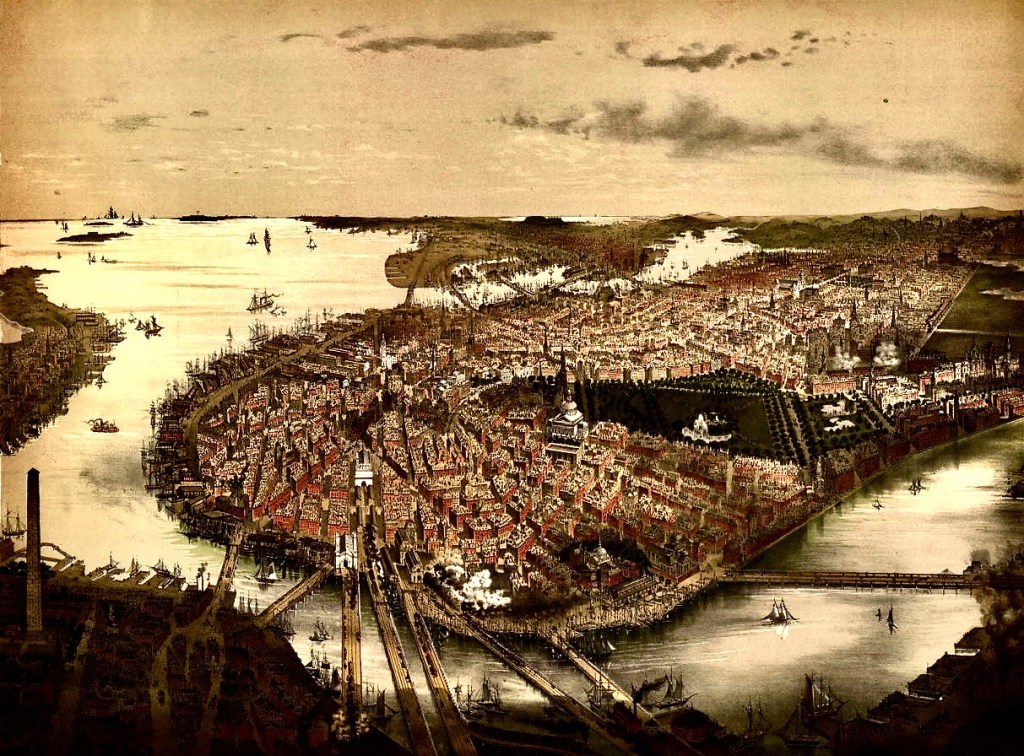
   When the Puritans first landed in Boston it was a rocky scrubland. There were hardly any trees but there were three hills. The Puritans believed their new place was a “City Upon a Hill.” Anybody who disagreed was either whipped or banished, or both. Catholicism was forbidden. Mary Dyer was hanged in Boston Common for defying a law banning Quakers. The biggest earthquake to ever hit the Northeastern United States struck the city in 1755. Five years later a “Great Fire” burned one neighborhood after another down to the ground.

   Boston’s population was more than a quarter million hoi polloi and their betters. The financial elite were the Boston Brahmins. “Here’s to good old Boston, the land of the bean and the cod, where Lowells talk only to Cabots, and Cabots talk only to God,” is how everybody understood it. William Gaston was the mayor the day Oliver landed there. The city was the religious, political, and commercial capital of New England. Before the Civil War, which ended a few years earlier, it was the launching pad for the north’s anti-slavery activities. When the Irish flooded the city after 1840 the Yankees made them do the dirty work. Irish women did cleaning work, cleaning up after the Lowells and Cabots.

   “Where should we start?” Oliver asked.

   “There be only one place to start and that be the Central Burying Ground,” Lucky said. “Follow me, sonny boy.”

   The Central Burying Ground was in a corner of Boston Commons. The city’s poorest folk were buried there in mass graves. Most of them were dismayed at being buried in a pit. The Dell, a large tomb, housed the remains of graves disturbed by street construction. “Many who stop there at night to catch their breath report feeling like somebody is standing next to them. They witness flashes of light, floating orbs, and more frightful occurrences,” Lucky said. “It will be twilight by the time we get there so we are going at a good time.”

   They passed the Omni Parker House, which was a hotel. “Charles Dickens used to stay there,” Lucky said. “He even lived there for two years. It was where he first performed ‘A Christmas Carol’ during one of their Saturday Clubs. He died just last year, back home in England. Now the rumor is his shade haunts the third floor, which was the floor he always stayed on. Some polite folk won’t sleep on that floor for fear of the Devil.”

   “How do you know so much about ghosts?” Oliver asked.

   “Because I am the under the table son of the Lady in Black,” Lucky answered.

   “Under the table?”

   “Never mind about that. See that island?” Lucky asked pointing to Georges Island at the entrance to Boston Harbor. “That be Fort Warren squatting on the land there. It opened for business just in time for the Civil War and just in time to kill my mother.”

   Fort Warren was built to protect Boston from Johnny Reb. The marching song ‘John Brown’s Body’ was written at the fort. The music was lifted from an old Methodist camp song. A half-moon battery of cannons protected the north sally port. The 15-inch smoothbore guns never fired a shot during the war. Instead, the fort became a prison for captured Confederates.

   “My mother came to Boston with me in tow in 1862,” Lucky said. “Her husband, not my father, was imprisoned at the fort. She cut her hair to make herself look like a man and snuck onto the island. She had a pistol and a pick axe. She was small enough to squeeze through the bars of the window of his cell. They tunneled out of the cell and were almost away when a guard overtook them. He slapped the pistol out of my mother’s hand. When it fell it discharged. The bullet hit her soul mate and ended his poor life on the spot. She was captured, tried, and sentenced to hang. She begged for a white dress to wear at the hanging, but they fitted her out with a black robe, instead. Many there are who see her wandering the island, unhappy and wailing, still in the same black robe.”

   They passed Faneuil Hall. “That place be haunted every which way,” Lucky said. “It was a place where slave traders used to sell darkies from Madagascar. Peter Faneuil made his fortune there at what we now call ‘The Cradle of Liberty.’ You see that golden grasshopper weathervane on top of the hall? There is a slave girl ghost who swings from it some nights, laughing at us passing by, laughing because she is now free.”

   They walked through the Quincy Market, an open air market added on to Faneuil Hall fifty years earlier. It was getting dark. Everybody was going home. When Oliver and Lucky got to the Central Burying Ground there wasn’t a mortal man in sight. A scruffy dog barked at them. Lucky patted him on the head, slipped him a shaving of goose jerky, and the dog joined them.

   Before long the sky got inky, but when a full moon rose Oliver and Lucky could see well enough. They settled down on the ground, leaning back against headstones. Nothing happened. Midnight came and went. Lucky fell asleep. The dog fell asleep, his head in Oliver’s lap. The middle of the night came and went. All of Boston, except for the city’s night watchmen, was asleep.

   It was not yet dawn when their mongrel companion started barking up a storm. Oliver and Lucky jumped to their feet. Oliver rubbed the sleep out of his eyes. He looked in the direction the dog was barking. 

  “Hey, that’s him, that’s my ghost,” Oliver exclaimed pointing to Jim Stubbs in the distance. He was more shadow than man. “Let’s go!” 

   “Hey ho,” Lucky whooped, hard on Oliver’s heels.

Previously: Resurrecting Jim Stubbs.

Next: The End of Jim Stubbs.

Ed Staskus posts monthly on 147 Stanley Street http://www.147stanleystreet.com, Made in Cleveland http://www.clevelandohiodaybook.com, Atlantic Canada http://www.redroadpei.com, and Lithuanian Journal http://www.lithuanianjournal.com

A New Thriller by Ed Staskus

Cross Walk

“A once upon a crime whodunit.” Barron Cannon, Adventure Books

“Captures the vibe of mid-century NYC.” Sam Winchell, Beyond Fiction

Available on Amazon: https://www.amazon.com/dp/B0CRPSFPKP

Late summer and early autumn. New York City. A Hell’s Kitchen private eye. The 1956 World Series. President Eisenhower at the opening game. A killer in the dugout.
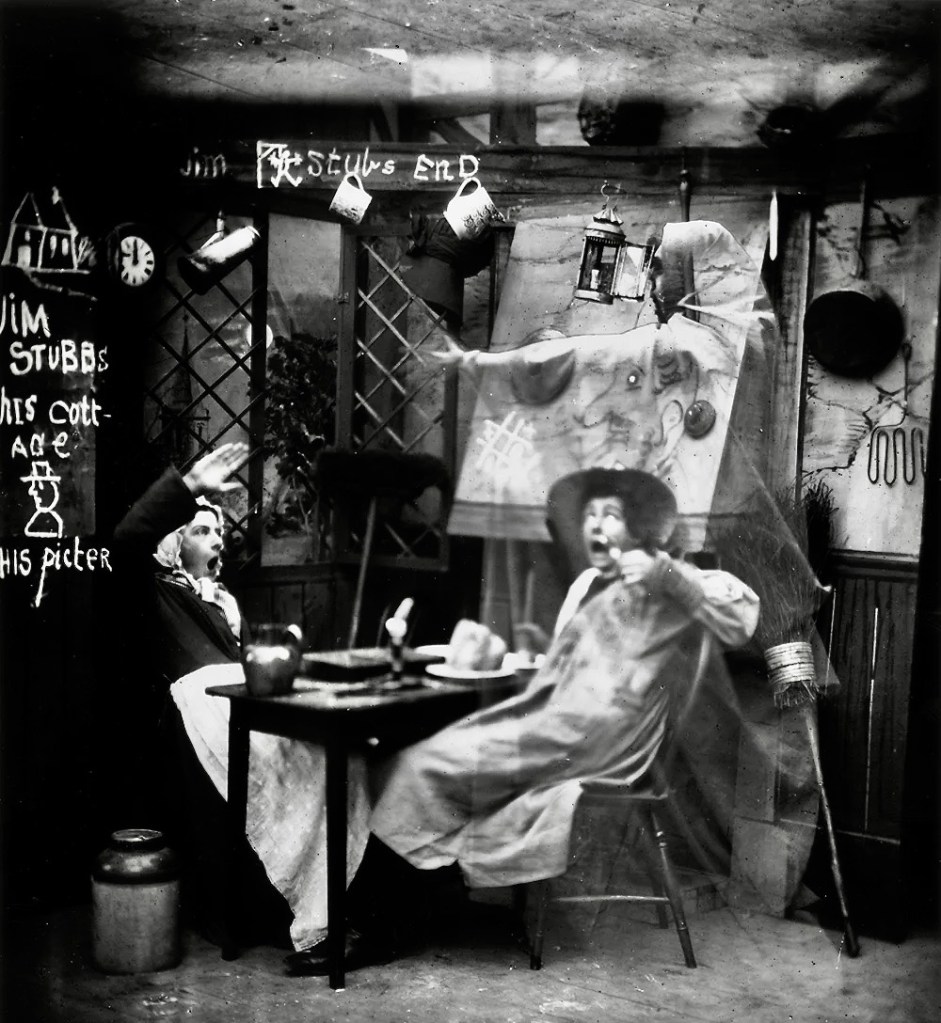
Resurrecting Jim Stubbs

By Ed Staskus

   Oliver didn’t like time traveling. He didn’t mind the travel part but didn’t like the time part. It took forever to push the time machine out of the garage, pull off and fold up the heavy waterproof cover, lube the gearbox, check the oil, and gas it up. It was bad on gas on top of everything else. He had to push hundreds of buttons and levers and switches to get it ready to blast off. Then there was the count down. Unlike NASA space ships, which took off after a ten count, the time machine required a one thousand count, counting backwards.

   God forbid he lose count, which happened once, and he had to go all the way back to the beginning. When he did he forgot when and where he was going, fumbled around with his memory, and finally gave up the project when his bedtime drew near. Since then he hadn’t gone time traveling. But the Jim Stubbs mash-up was too big to ignore. It was time to suit up again.

   The time machine was both simple and complex. When it was time to go Oliver fastened his seat belt, dialed up the target date, sometime in the past or the future, and pushed a big red button that said “GO.” He watched and waited while time rewound or fast forwarded. It never took long to get to the target time and place unless it was many centuries away. When he got there he sprayed the time machine with invisibility spray and marked the coordinates with a sextant. The worst thing that could happen would be to not be able to find it again.

   It would have been easier to use a cell phone with GPS, but his mother wouldn’t let him or his sister Emma, who was his right-hand man, have one even though he was already eight years old and his sister was ten years old. Their mother was conservative and believed in family values. All the things the family had, like their cars and computers, were new as could be. The woman of the house, however, stayed in her believe-you-me ways when it came to beliefs.

   “Mom,” Emma asked, “why do we have to take old stuff for granted?”

   “First of all, it’s not old stuff, and second, you’re too young to understand.”

   “I will never be old enough to understand,” Emma groused.

   Her mother ordered Emma to go to her room. She pulled out her cell phone. It was almost as big as an iPad. “You go to your room for an hour, young lady,” she said. “I’m timing it.”

   In her room Emma flopped on her back on her bed. She raised an arm and pointed at a corner. “And in this corner, still undefeated, my mom and her long-held beliefs,” she said but not so loud that her mother could hear her.

   Oliver and Emma were the Monster Hunters of Lake County. They lived in Perry, about 30 miles east of Cleveland, Ohio along the south shore of Lake Erie. He was the best monster hunter in the county, if not the whole state, even though he was the youngest. He had a sixth sense about it. Most of the others didn’t have any sense about them. Most of them were booski’s who were forever getting lost in the weeds.

   He landed his time machine in Boston near William Mumler’s Photography Studio. The spirit photographer was a big hit in his part of the world, especially since he had been arrested for fraud in New York City a year before. He took pictures of people, photographs that included, when they were developed, images of their deceased loved ones. Not everybody believed in the pictures. P. T Barnum, circus man and self-appointed expert on suckers, testified at the trial that it was all hokum. 

   “It’s all a sham,” he said. But the jury couldn’t make up its mind. It became a mistrial. William Mumler went back to Bean Town a free man.

   William Mumler charged a dollar for a portrait. He charged ten dollars for a portrait when it included a spirit. When Emma did the math later ten dollars came out to more than two hundred dollars in today’s money. When she asked her mother if capitalism was a family value, she had to spend another hour in her room and pay her mother a dollar for bothering her.

   “We believe in family values in this family, do you understand me, young lady?”

   “Yes, mom,” Emma said and crept away.

   William Mumler displayed a photograph of Mary Todd Lincoln. He took it in 1870. It astonished everybody. A translucent image of Abraham Lincoln, her husband, was in the picture sitting beside her on the sofa. The picture was taken five years after Abraham Lincoln had been assassinated. “He looks so alive,” everybody said. Nobody thought it was a trick. Only the photographer knew it was a trick. He didn’t tell anybody, least of all himself.

   “You can fool some of the people all of the time, and all of the people some of the time, but you cannot fool all of the people all of the time,” Honest Abe had once said. He spent most of his days when the 21st century rolled around rolling over in his grave. Years of day-to-day lies on Fox News, Twitter, and Facebook had worn him out. “If I ever come back I am coming back as Dishonest Abe and fight fire with fire, especially with that Donald the Borgia.”

   The spirit photographer had sent an SOS about Jim Stubbs by telegraph to every ghostbuster he knew or had ever heard about. Oliver wasn’t exactly a ghostbuster and was living a century and a half later, but he somehow got wind of the SOS. He didn’t know how to reply since telegraphs were long gone but he wanted to help, even though the time machine was a pain in the butt. Landing it in the Back Bay had been a struggle. It was 1871 when Oliver appeared out of the blue in Boston.

   “The Jim Stubbs photograph I made is a phony, but Jim Stubbs, even though he is no longer real, has become real again,” William Mumler’s telegraph read. “He has come back and won’t leave. He is scaring the life out of everybody. Please come and help.”

   Oliver walked into the photographer’s lobby like a duck out of water. A police officer on the beat looked him over. The boy looked queer to him. The police officer was an older man and  carried a standard issue six-foot pole painted blue and white. It was what he used to protect himself. He had a rattle to call for help in case things got out of hand. Boston was bustling with the high and low. Landfills and annexations of neighboring villages had grown the city from one square mile to forty square miles. Shoe and textile factories were around every corner. Maritime commerce out of the ports sailed worldwide. Everybody was taking in boarders in the North End and on Fort Hill as immigrants poured into the city.

   William Mumler had gotten many offers of help, but none from a boy who walked, talked, and dressed like he was from a different world. “Who are you,” he asked, scratching his beard. He would have scratched his head except he was nearly bald.

   “My name is Oliver,” Oliver said. “I’m a monster hunter, although I go after spirits and creatures, too.”

   “What do you do when you find them?”

   “I tell them to go away.”

  “What if they refuse to go.”

   “I have my own way of getting results.”

   “You’re not from Boston, are you?”

   “No.”

   “Do you mind if I take your picture?”

   “No, I don’t mind.”

   The first photographic portrait studio ever in the United States opened in Boston. Oliver sat for his picture. He had to sit still for five minutes for the taking of it, which was on a glass plate. The photographer took it into a back room to develop. When he came back he was scratching his beard again.

   “I don’t know what happened, but everything is in the picture except you.”

   He tried again. When he came back again he showed Oliver the second photograph. The background was in the picture. The chair Oliver had sat in was there. What wasn’t there was Oliver.

   “Are you a spirit of some kind?”

   “No, but I came here in a time machine from 2023. Maybe that’s why the camera can’t see me.”

   “The year 2023 in the future?”

   “Yes.”

   Oliver could tell the spirit photographer had a million questions. He wasn’t ready and willing to answer a million questions. “What is your Jim Stubbs problem, exactly?” he asked.

   “My problem, young man from the future, is that I resurrected Jim Stubbs, and now the villain won’t go back to where he belongs.”

Next: Searching for Jim Stubbs.

Ed Staskus posts monthly on 147 Stanley Street http://www.147stanleystreet.com, Made in Cleveland http://www.clevelandohiodaybook.com, Atlantic Canada http://www.redroadpei.com, and Lithuanian Journal http://www.lithuanianjournal.com

A New Thriller by Ed Staskus

Cross Walk

“A once upon a crime whodunit.” Barron Cannon, Adventure Books

“Captures the vibe of mid-century NYC.” Sam Winchell, Beyond Fiction

Available on Amazon: https://www.amazon.com/dp/B0CRPSFPKP

Late summer and early autumn. New York City. A Hell’s Kitchen private eye. The 1956 World Series. President Eisenhower at the opening game. A killer in the dugout.

Rockets’ Red Glare

By Ed Staskus

   “Don’t you get scared fighting all those monsters?” Tommy One Shoe asked Oliver, who was chewing on a blade of grass. It tasted like somebody’s bare foot. He spit it out.

   Whenever there was monster trouble, and somebody asked who they should call for help, Oliver was at the top of the Help Wanted list. Tommy was one of his best friends. Emma and Dorothy were with them. Emma was Oliver’s older sister and right-hand man. Dorothy was Tommy’s next-door best friend. They all went to the same school, Perry Elementary, except they didn’t go to school in the summertime.

   It was the morning of the Fourth of July. The day had been a federal holiday since 1941, but the tradition of Independence Day went back to the 18th century and the American Revolution. The Continental Congress voted for independence 246 years ago and two days later rolled out the red carpet for the Declaration of Independence. Since then, there had been parades, concerts, and fireworks galore to celebrate the big day. 

   Oliver mulled over Tommy’s question. “If I thought about it too much you bet I would be scared,” he said. “I leave the thinking to Emma. Most of the time there’s too much going on to be scared, anyway. The best thing to do is go into action. If you stand around too long your worst fears can come true any second.”

   “I’m more scared of shots than I am of Dracula,” Tommy said. “I’m even more scared in the doctor’s office. They make you wait forever for the shot.”

   They were at Indian Point Park, just minutes from where they lived. Oliver and Emma lived in the Canterbury Crossing Condominiums while Tommy and Dorothy lived in the Pebble Creek Crossing Condominiums, They had walked to the park. It was a warm sunny day. They were where the Grand River and Paine Creek bumped into each other. There was a totem stone nearby. The names of boys who went to Charles Lyman’s military camp there a hundred years earlier were carved into the stone. The encampment back then was called Camp Wissolohichan. Nobody knew how to pronounce it.

   “I love your name,” Emma said to Dorothy.

   “I hate it,” Dorothy said. “My mom saw some old movie about a little girl who fought witches and flying monkeys. The girls name was Dorothy. My mom said she was the bravest girl in the world and so she named me after her.”

   “Do you have a nickname,” Emma asked. “I could call you that.”

   “No, but you can call me Dottie, which is what everybody else calls me.”

   “I have an uncle who changed his name when he was nine years old.”

   “I never heard of anybody nine years old being allowed to do that,” Dottie said.

   “He did and he made it stick,” Emma said. “His name was Harold. Everybody called him Hal. One day he told everybody they had to start calling him by his new name if they wanted to stay friends with him.When they asked he told them he had changed his name to Magnus. After that everybody called him Mags. He didn’t like it when he found out Mags was a girl’s name. He changed it again to William. Everybody called him Billy after that.”

   “My mom would kill me if I tried to change my name,” Dottie said. Emma nodded solemnly in agreement. She knew full well how serious adults could be, especially her mother.

   “What if a monster tried to kill you?” Tommy asked Oliver.

   “I would tell them it’s not allowed,” Oliver said. “They can try to run away, but no killing.”

   “What if they don’t listen?”

   “I have my ways of making them listen. If they don’t, I destroy them. If I have to, I destroy them twice. After I do that they never come back.”

   “What are you doing later on?” Tommy asked.

   “We’re having a barbeque,” Oliver said. Americans eat almost two hundred million hot dogs every Fourth of July. “My dad is doing burgers and dogs.” Their mother didn’t cook anything unless it was a pasta salad. “You and Dottie are both coming over, don’t you remember?”

   “Oh yeah, sure,” Tommy said, racking his memory. He was called One Shoe because he forgot his second shoe one morning on the way to school and spent the rest of the day limping around in the other shoe, dragging his bare sock behind him, wearing a hole out in it.

   “Did you know that some of the soldiers who were in the Revolutionary War didn’t have shoes, not even one shoe, and they wore rags for socks?” Oliver asked Tommy.

   “What do you mean? How could that be?” It still got on Tommy’s nerves whenever anybody even hinted at his one shoe false step. “How do you know that?”

   “Our teacher told us all about it, about how some of the soldiers froze at Valley Forge and how their toes fell off.”

   “My dad says we are free because of Valley Forge,” Tommy said. “He calls it the War of Independence. He was in Afghanistan when he was in the army before I was born. He says it was awful, but it was something that had to be done.”

   “Does he say why?”

   “No, he never talks about why. I asked him if he was scared. He said yes, but the other side of fear is freedom, which is the side we want to be on, whatever that means.”

   Oliver and Tommy thought about what it might mean but gave up. They eye-balled a river otter swimming past them. The spring thaw had resulted in flooding but there hadn’t been any heavy rain since mid-May. The water was like a quiet country road. The otter took its time. They took their time watching it.

   “We otter get going,” Oliver joked.

   “Are your relatives going to be at the barbeque?” Tommy asked as they walked up a trail to the bluffs overlooking the Grand River.

   “Yeah,” Oliver said.

   “Oh, man, does that mean we have to do crafts?” Tommy asked. Oliver’s relatives always brought scissors and glue. Everybody who was a child had to join in. He wasn’t an arts and crafts boy. He liked to eat, though.

   Oliver and Emma’s relatives coming to their Fourth of July barbeque were from their mother’s side. They lived nearby. There were two sisters and their husbands. One of the husbands drove a Jeep and repaired car washes. The other man drove a RAM pick-up and was the silent type. He usually had his face in his cellphone. Both men were conservative family men. There were four grown-up children, all girls, all in their early 20s. All of the young women had a lazy Susan of boyfriends.

   After they watched house flies getting dizzy at the sight of the barbeque buffet, then eating their fill when their turn came, and later throwing a Frisbee back and forth for an hour, afterwards taking a quick nap, when the long day finally settled into dusk Oliver, Emma, Tommy, and Dottie walked to the Madison Avenue Estates. Their friend Jimmy lived there and had a box of bottle rockets ready to go.

   “It’s like an exploding Christmas,” Dottie said, watching the rockets’ red glare in the night sky.

    “Independence Day is the best day ever,” Emma said.

     “You bet it is,” Tommy One Shoe said. “Today is the day Will Smith saved us from the aliens.”

Ed Staskus posts monthly on 147 Stanley Street http://www.147stanleystreet.com, Made in Cleveland http://www.clevelandohiodaybook.com, Atlantic Canada http://www.redroadpei.com, and Lithuanian Journal http://www.lithuanianjournal.com

A New Thriller by Ed Staskus

Cross Walk

“A once upon a crime whodunit.” Barron Cannon, Adventure Books

“Captures the vibe of mid-century NYC.” Sam Winchell, Beyond Fiction

Available on Amazon: https://www.amazon.com/dp/B0CRPSFPKP

Late summer and early autumn. New York City. A Hell’s Kitchen private eye. The 1956 World Series. President Eisenhower at the opening game. A killer in the dugout.
Back of the Black Hand

By Ed Staskus

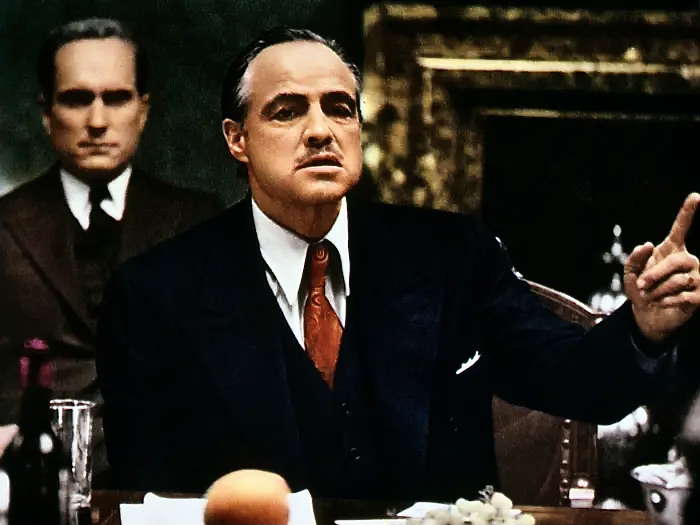
   When Oliver’s neighbors started seeing the ghost of the Godfather, the one and only, roaming the streets of Canterbury Crossing at night, Oliver assumed they had been watching too many reruns of the gangster saga. But when a pack of them trooped into his family’s living room and asked to see him about the sightings, asking him to make their streets safe again, it was an offer he could not refuse.

   Oliver was the Monster Hunter of Lake County. He had been hunting them for more than two years, ever since he turned six. At first, he went at it alone, but his sister Emma quickly became his right-hand man. She wasn’t as brave as him, but she was smarter.

   “Always be smarter than the people who hire you,” she told Oliver.

   “But nobody hires us,” Oliver said. “We’re volunteers.”

   “You know what I mean,” she said. 

   “What about bravery?” he asked.

   “There’s a fine line between bravery and stupidity.”

   Oliver knew when not to argue with Emma. He wanted to say stupidity was the fashion of the day but that bravery never went out of style. He wanted to say something along those lines but didn’t. He knew it was bravery that always paid off, but he was going to wait for another day to say so. After the neighbors had voiced their concerns about the Godfather, about how the spirit was scaring dogs and children, dragging chains behind it that kept everybody awake at night, Oliver agreed to help.

   “I can’t make any promises,” he said. They were not put off. They had seen him in action before. They had seen him save the Perry Nuclear Power Plant when Goo Goo Godzilla attacked it. “Just make it go someplace else, anyplace other than our backyards,” they said.

   That night, when everybody’s TV’s were off, the children tucked in and the adults snoring their heads off, Oliver and Emma snuck out of the house. They slipped through the sliding back door so that nothing would slam shut in their faces. It was as dark as drawing a blank. Oliver flipped on the flashlight he had brought and cast its beam far and wide. The Godfather was nowhere in sight.

   Emma didn’t like looking for the Black Hand when she couldn’t even see the back of her hand, and said so when Oliver swung his flashlight in her direction.

   “What’s the Black Hand?” Oliver asked. 

   “That’s the gangsters, the mob,” Emma said. ”At least, that’s what everybody used to call it, before calling it the Mafia.”

   The Black Hand went back more than two hundred years when some Sicilian immigrants learned to write English and started sending extortion letters to anybody in San Francisco, New Orleans, New York City, and everywhere else, who they thought would pay up. They threatened arson and murder. They signed their letters with pictures of a black hand and a dagger. If they thought you needed extra convincing, the dagger was drawn dripping with blood.

   “How do you know all that?” Oliver asked. 

   “I read it in a book,” Emma said. She read books morning noon and night, scores of them. Oliver was like his father. He never read books unless he absolutely had to. Some of Emma’s books, like the one about the Mafia she had gotten from the Perry Public Library, her parents didn’t know anything about. She kept them well hidden. She was a sassy pre-teen. Her mom had forbidden her to read certain books. She had been a corporate lawyer and knew all books except law books were full of lies. When Emma explained they were living in Ohio, not Florida, her mom gave her a sharp look. She thought libraries in Florida were on the right track banning books and wanted to move to the Sunshine State.

   “I don’t want to go back there,” Emma said. “It was a hundred degrees every day the week we went to Disney World and the sewers smelled bad.”

   “They smell bad because so many politicians live in Florida,” Oliver said. “When they move to a swamp they think they’ve come up in the world. They’re after happy money, the kind that makes only them happy and other people unhappy. They wouldn’t give you the skin off a grape unless there was something in it for them.”

  Just then the Godfather unfurled like a snake from behind a utility pole.  Emma reached into her back pocket and pulled out the jackknife she always kept handy. The Godfather looked at it and snorted.

   “What are you worried about?” he said. “If I wanted to kill you, you’d be dead already.”

   “Oh,” she said. “I guess you’re right Mr. Godfather.”

   “You can call me Vito,” he said. 

   “I thought you were Marlon Brando.”

   “Don’t talk about any stinking actors to my face,” he snapped. “If you do you will sink with the fishes.”

   “I thought it was swim with the fishes.”

   “In my world, bambino, it is sink like cement, fish or no fish”

   “Didn’t you like the movies about you?”

  “I didn’t say I didn’t like them,” the Godfather said. ”I liked them well enough but I’m not going to say I want to cuddle up and kiss them. That Marlon Brando, I will tell you, I would slap his face into hamburger meat if he was still around.”

   “What are you doing in our neighborhood?” Oliver interrupted.

   “I’m trying to find out where we went wrong,” the Godfather said. “We used to make big money from the protection rackets, extortion, booze, drugs, gambling, and girls. When I heard it was all gone I couldn’t believe it. I came back, went to the top cities, Atlantic City, Las Vegas, and then the small fry, and I finally landed here, which is just about as nowhere as it gets.” 

   Oliver and Emma exchanged looks. What did he know about Perry? What a blowhard! He was as bad as a Florida politician.

   “What did you find out?” Oliver asked.

   “I found out nobody pays protection money to nobody anymore. Extortion is a lost cause. Booze, drugs, and gambling have all become legal, and free sex killed the girlie trade. There’s never a dame around when you hit the skids.”

   “When are you leaving?” Oliver interrupted again. The night was getting cold as witch’s toes. He was getting tired of the Godfather explaining and complaining. He wasn’t the Complaint Desk of Lake County. He didn’t care about crocodile tears from any washed-up crime lord. He didn’t care if it was Marlon Brando or Vito Corleone. Whatever his name was he had to go before he got up to any more shenanigans.

   “I don’t know that I will be leaving,” the Godfather said. He was starting to look prim and proper, like he might even pay his property taxes. “Where I live now makes me hot under the collar. I saw a nice cemetery down the road. There were lots of trees to keep me cool. I might move there.” The cemetery was the Perry Cemetery, less than a mile away. Some of the earliest settlers from the early 1800s were buried there, like the farmer Ezra Beebe.

   When Ezra Beebe heard the Godfather say he might move in, he got busy and dug himself out of his grave. He marched down S. Ridge Rd. to the Canterbury Crossings Condominiums. He took a right at the entrance and stopped where Oliver, Emma, and the Godfather were. He ignored Oliver and Emma. He marched up to the Godfather. He had a three-pound bag of salt with him. He poured it out at the Godfather’s feet, making a circle. When the gangster tried to step over the circle of salt, he found out he couldn’t. He was trapped inside the roundness. Ezra tossed handfuls of sage on the ground and set it on fire. It didn’t smell bad, except to the Godfather, who started wheezing and coughing.

   “I am cleansing this neighborhood,” Ezra said. “All evil spirits must leave.” No sooner did he say what he had to say than he turned his back on the Godfather, crossing his arms over his chest, looking into the distance. He didn’t look fearful or angry. He had been dead a long time and knew the score. He waited for the show to start.

   An oily plume of smoke seeped up from a sewer grate at the Godfather’s feet. Before long he was engulfed by the smoke. When the air cleared, the Godfather was gone.

   “He ain’t coming back any time soon,“ Ezra said, leaving as quietly as he had come.

   “Thank goodness he showed up,” Emma exclaimed. “I don’t know what we could have done if he hadn’t.”

   Oliver pointed to the packages of salt and sage he had brought with him. “I would have thought of something,” he said.

Ed Staskus posts monthly on 147 Stanley Street at http://www.147stanleystreet.com, Made in Cleveland http://www.clevelandohiodaybook.com, Down East http://www.redroadpei.com, and Lithuanian Journal http://www.lithuanianjournal.com. To get the site’s monthly feature in your in-box click on “Follow.”

Help support these stories. $25.00 a year (7 cents a day). Contact edwardstaskus@gmail.com with “Contribution” in the subject line. Payments processed by Stripe.

“Ebb Tide” by Ed Staskus

“A stem-winder in the Maritimes.” Sam Winchell, Beyond Fiction

Available at Amazon: https://www.amazon.com/dp/B0CVDP8B58

Summer, 1989. A small town on Prince Edward Island. Mob money on the move gone missing. Two hired guns from Montreal. One rookie RCMP constable stands in the way.

A Crying of Lot 49 Publication

One Two Buckle My Shoe

By Ed Staskus

   The Saturday afternoon the Cleveland Guardians made short work of the New York Yankees at Progressive Field was the afternoon Oliver’s father took him and his sister Emma to Grays Armory after the game was over. The baseball stadium was on East 9th St. The Lake Erie Cemetery, where nearly 8,000 early settlers were buried, was across the street. On the other side of the boneyard, where Bolivar Rd. and Prospect Ave. meet before ending up at East 14th St., was Grays Armory.

   They were a half hour west of their home, downtown in neighboring Cuyahoga County, and Oliver was technically off-duty. His father, however, had promised a friend to bring his son to the armory to see if he could do something about Lou the Caretaker, the only ghost still hanging around.

   The Cleveland Grays got started when the Canadian Rebellions of 1837 got into full swing. The city fathers acted, forming a volunteer military company, to protect themselves from Canucks on the loose. They weren’t called the Grays at first. They were called the Cleveland City Guards but since their uniforms were gray they changed the name the next year. They wore Queen’s Guard bearskin hats that made them look a foot taller than they really were. They adopted “Semper Paratus” as their motto. Nobody knew what it meant because it was in Latin. The man upstairs finally explained it meant “Always Prepared.” Everybody liked that. There were 65 of the Grays.

   They set up shop on the fourth floor of a building called the Mechanics Block. Thirty years later they needed more space. They moved into an old fire station. Ten years later they moved into the newly built City Armory, sharing it with the Ohio National Guard. Soon after that a fire burnt the building to the ground. They decided to build their own place that would stand the test of time. 

   A seven thousand pound block of sandstone was set in place in 1893 for the foundation of Grays Armory. It grew to be three stories high with a five-story tower on the northeast corner. It was built as an urban fortress. There is a black iron drop-gate and iron barriers in front of the solid oak front doors. Iron rods are bolted to the brick walls as window protectors. 

   The armory was built to store guns and ammo. The drill room was where the Grays marched up and down in tight formations. But it wasn’t long before it became a kind of community center. The Cleveland Orchestra’s first concert in 1918 was staged there. The first time the Metropolitan Opera came to town they sang songs of doomed love and hellfire there. The first home and garden show and the first auto show in Cleveland were held there.

   Oliver looked the building up and down. It was Romanesque, built of brick and sandstone. It wasn’t an armory anymore, but a museum preserving local military heritage. Nobody drilled in the drill room. It had been converted into a ballroom. When boys and girls got married they sometimes had their wedding receptions in the hall.

   “That’s the problem,” Oliver’s father explained. “The wedding receptions help keep the building afloat, but Lou is always shouting something or other and slamming doors, not to mention crawling under the tables. It freaks people out. One bridesmaid got very upset when she felt a hand on her ankle.”

   “Dad, did you say he’s the only ghost here?”

   “Yes, all the others have long since gone. He’s the last ghost standing.”

   “Why didn’t he leave with the others when they left?” Oliver asked.

   “Nobody knows, although I think it’s because he was the man who kept the armory spic and span for many years. He’s been here a long time. He doesn’t like it when it gets messy. When it does he gets right to work, which is a big help to the maintenance man. He and Lou get along just fine.”

   Lou had been the caretaker at the armory from its earliest days, living on the top floor of the turret tower. He never married. He liked to read private eye page-turners and drink beer at night, stretched out on his sofa. He dropped dead of a heart attack in the meeting room on the ground floor of the turret tower. After he was buried he snuck out of the graveyard, went back to Grays Armory, and had not left since then.

   “Lou is always walking through closed doors. Museum visitors can hear his footsteps but none of the motion sensors ever pick him up. Whenever anybody starts talking about him the flags in the ballroom start falling off the walls. One night in the middle of the night an alarm went off. When the police got here they didn’t see a thing. When they checked the security camera footage they saw what looked like fluorescent mist in the room that the alarm went off in. Everybody knew it was Lou.”

   “What did the police do?” Oliver asked.

   “They said, case closed, and went away.”

   “Do you want me to get him to go away and not come back?”

   “Yes.”

   “But it’s his home.”

   “When your day is done, son, you can’t go home again.”

   “Didn’t your friend say Lou drank apple cider vinegar for his health every day?” Oliver asked.

   “Yes, every morning. He drank beer at night.”

   “All right, then. I need a bottle of apple cider vinegar. And, even though I don’t know if we’ll need it, get a bottle of beer, too, just in case.”

   Oliver’s father walked to the Heinen’s Supermarket on East 9th St. and bought a bottle of Bragg’s apple cider vinegar and a bottle of Broken Skull IPA. He was back in 20 minutes. He and Oliver stepped inside the meeting room on the ground floor of the turret tower. Oliver poured a glass of the vinegar and set it on a side table. A big potted plant in the room began to shake. Lou the Caretaker walked in. He walked to the glass of apple cider vinegar and took a sip. When he saw the bottle of beer he took a long pull on it.

   “That hit the spot, believe you me,” he said.

   “I’m glad it did Mr. Lou, but now we’ve got to talk about your new home.”

   “What new home? I’m happy here.”

   “I have got to ask you to leave,” Oliver said.

   “But why?”

   “You scare the daylights out of living people, for one thing. Another thing, your time is done here. It would be best if you joined the other ghosts who used to be here. It’s best to be among your own kind. They probably miss you. This will just take a minute, but I have to recite something official.”

   Oliver stood back and concentrated.

   “By the power of all my good karma, direct connection to the source, agape love, and selfless acts, I ask the universe to please remove all spooky entities from this place,” he said in a baseball announcer’s tone of voice. “You are not welcome here, so please go to where you are welcome. Over and out and batter up.”

   “If you’re going to put it that way, all right then,” Lou said.

   Oliver’s father walked Lou to the supermarket. He bought two more bottles of apple cider vinegar and a six-pack of beer. Outside, he handed them to Lou. When he did Lou became invisible with a poof, even though he was still there. The shopping bag of vinegar and beer floated hip high across Euclid Ave and down East 9th St. towards Lake Erie. Every single person who saw the doubled-up blue plastic bag going past on its own nearly jumped out of their skins. The only person who didn’t was a policeman who stopped traffic at St. Clair Ave. so the bag could go by in safety. He had seen more unexplained bumps in the night than he cared to remember.

   It wasn’t long before the bag was a speck in the distance. Oliver’s dad turned back towards Grays Armory. Oliver and Emma were sitting on the front steps. Dusk was going dark. He flashed a thumb’s up while taking the stairs and joining his children.

   “Where’s Lou?” Oliver asked.

   “Looking for a dead-end street,” his father said.

Ed Staskus posts monthly on 147 Stanley Street at http://www.147stanleystreet.com, Made in Cleveland http://www.clevelandohiodaybook.com, Down East http://www.redroadpei.com, and Lithuanian Journal http://www.lithuanianjournal.com. To get the site’s monthly feature in your in-box click on “Follow.”

Help support these stories. $25.00 a year (7 cents a day). Contact edwardstaskus@gmail.com with “Contribution” in the subject line. Payments processed by Stripe.

“Ebb Tide” by Ed Staskus

“A stem-winder in the Maritimes.” Sam Winchell, Beyond Fiction

Available at Amazon: https://www.amazon.com/dp/B0CVDP8B58

Summer, 1989. A small town on Prince Edward Island. Mob money on the move gone missing. Two hired guns from Montreal. One rookie RCMP constable stands in the way.

A Crying of Lot 49 Publication

Wall of Voodoo

By Ed Staskus

   The Wall of Voodoo was a plywood wall littered with dolls. There were nearly a hundred of them in a garage behind a brick house on Vrooman Rd. a mile north of I-90. The dolls had pins stuck in them. The pins didn’t bother the dolls, although they bothered the people who the dolls represented. If they didn’t have aches and pains already, they had them for sure once a pin cushion of them went up on the Wall of Voodoo.

   Voodoo is a religion that came out of West African ancestor worship and is practiced mostly in Haiti and parts of the American south, especially Louisiana. It is about serving spirits. Prayers and rituals honor the spirits and ask for their blessings. Voodoo enthusiasts chant, dance, and go into trances. Papa Gede is the number one spirit. He is a skeleton who wears a top hat and carries a cane down Resurrection Road. Voodoo dolls are almost always good, meant to bring good fortune to the person they represent. Friends and relatives pin flowers and photographs on the doll to appeal to the spirits.

   Sometimes bad people make voodoo dolls do things they don’t want to do. Those bad people ask the devil to give them black magic to get their revenge on somebody. No matter how much the dolls protest, once they are on the Wall of Voodoo they have to do the bidding of the evildoers who put them there.

   Hardly anybody in the town of Perry knew anything about voodoo. What they knew was lots of their neighbors were suffering from unexplained ailments. One newcomer in town was a man relocated from Louisiana. He knew an incantation that could bring Papa Gede to life for a minute. When the spirit appeared, the man asked him one question.

   “Is anybody in these parts messing around with voodoo dolls?” he asked Papa Gede.

   “Yes,” the spirit said, and disappeared in a puff of smoke. He didn’t like the weather north of Mason-Dixon. He sped back to the bayou.

    Lake County is a conservative northeastern Ohio county, more conservative than most of the state and more conservative than the rest of the country. Everybody had new cell phones, new flat screen TV’s, and new $50 grand pick-up trucks with gizmos galore, but they didn’t like anything new. They didn’t like the emerging culture. They especially didn’t like any new religions. If the religion had something to do with Africa, they liked it even less. 

   They thought of themselves as can-do people but didn’t know what to do about voodoo dolls spreading misery in their corner of the world. They were at their wit’s end when a local gossip piped up, “I heard there’s a boy who lives in one of the developments near Perry Cemetery who everybody says is a monster hunter. Maybe he could help.”

   Oliver was the Unofficial Monster Hunter  of Lake County. He saved the Perry Nuclear Power Plant when Goo Goo Godzilla attacked it. He saved Lake Erie College in Painesville from Old Joe Croaker. He knew how to deal with ghosts and trolls.  He was just over eight years old. His sister Emma was his right-hand man. She was just under eleven years old.

   “Okey doke,” Oliver said when a delegation of Perry men and women asked him for his help.

   “What are you going to do?” Emma asked him when they were alone.

   “Everybody in a sick way seems to live near here,” Oliver said. “Whatever is making it happen must be close by. I’ll get my Bad-Oh-Meter and we’ll go looking for it.”

   “Alone?”

   “No, you’ll be with me,” Oliver said.

   Emma stuck her trusty jackknife into her back pocket. Oliver turned in a slow circle. His Bad-Oh-Meter was a Y-shaped forked stick. It looked like a dowsing rod. He and Emma followed its lead when it started to twitch. They cut through the Church of Jesus Christ’s weedy field, walked up S. Ridge Rd. to Vrooman Rd., walked across the bridge spanning the Grand River, and soon came to a brick house where the Bad-Oh-Meter started twitching like a madman. 

   There were two giganto vinyl banners on the front lawn. One was turned slightly to face traffic coming on one direction. The other one was turned slightly the other way. One said, “Don’t Blame Me, I Voted for Trump.” The other one said, “Trump 2024 Make Votes Count Again.” The banners were blue, the lettering was white, and the trim was red.

   “I thought he was a traitor, not a red, white, and blue patriot,” Emma said.

   “Don’t let grandpa hear you say that,” Oliver said. “His head would explode.”

   When they walked up the driveway the Bad-Oh-Meter twitched to behind the house towards the garage.

   “Whatever it is, it is in there,” Oliver said.

   What they found was the Wall of Voodoo. The voodoo dolls were slapdash on the wall. Each one of them had lots of pins stuck in it. Each one also had a name written on a scrap of paper. One of the names was Harry Culver, who lived in their development and had recently been complaining about his suddenly achy knees. There were pins stuck in his doll’s knees. Below his name was written “DEMOCRAT PANSY.” The same words were written below each one of the names.

   “What’s a pansy?” Oliver asked.

   “Beats me,” Emma said, stumped.

   Oliver and Emma took the dolls off the wall, took all the pins out of the dolls, removed the scraps of paper, and threw everything in a pile outside the garage. They found a can of gasoline and poured it on the pile, setting it on fire with kitchen matches Oliver always carried in his Monster Hunting Field Kit. They went back to the garage to make sure they hadn’t missed anything. When they did they saw a half-scale mannequin of Donald Trump, wearing a red baseball cap and smirking.

   “I thought he was bigger,” Oliver said.

   “I thought he was smaller,” Emma said, and just for fun jabbed the tip of her jackknife into the mannequin’s big toe.

   At Mar-a-Lago Donald Trump was on his way from the dinner table to the bathroom. He felt a sharp pain in his big toe. He couldn’t walk. He stopped and sat down. He called for help.

    “We should stick a pin in his tongue since he’s such a blabbermouth,” Oliver said. Both of them thought it was a good idea.

   “What’s wrong with the boss?” asked one of Donald Trump’s flunkies.

   The bossman wanted to say what was wrong but when he tried to talk he felt a stabbing pain in his tongue and couldn’t say a word. He pointed to his big toe and his tongue, grunting and squirming. His flunkies couldn’t make heads nor tails of what he was trying to say. “Maybe he could tell us on Twitter,” one of them suggested. When they looked, they couldn’t find his solid gold cell phone. He had left it on the dinner table, where his children stole it and sold it on eBay. The flunkies dragged him to his bedroom and laid him out on his king size bed.

   Oliver and Emma were tending to the fire when a billy goat came running out of the house. He was wearing body armor and waving an AR-15. “What the hell are you doing?” he squawked and raised his gun. All of a sudden Papa Gede appeared. Smoke was pouring out of his ears. His bones were radiating. He was mad as the dickens. He didn’t like his voodoo being used for evil purposes.

   “Get away from those children,” he roared and struck the man on the side of the head with his cane. The man went down like a lightweight and started crying and complaining. He swore he would sue Papa Gede for all he was worth. “When my lawyers get done with you, you will be mashed potatoes,” he foamed at the mouth. 

   Papa Gede had heard enough. He snapped the AR-15 in half over his knee and threw it to the side. He spit on the fire. The flames got red-hot higher. He picked the man up, tossed him over his shoulder, and carried him to the house.

   “If you go inside and behave yourself, I will forgive and forget,” Papa Gede said.

   Machine Gun Kelly ran to his front door, tripped over the threshold, and crawled inside. He broke his fall with his fingernails. He got on the horn to 911. “Help, there’s a monster here, hurry, send the SWAT team!”

   “A fat lot of good that’s going to do him,” Papa Gede said laughing bananas in the split second before disappearing.

   “Thanks, pops!” Oliver called after him.

   Emma and he went back to the fire, dumped a bucket of water on it, and scattered the ashes. There was nothing left of the voodoo dolls. Walking back home, when they got to the bridge over the Grand River, they stopped and looked down. It had gotten dark and a full moon was reflected in the still water. A breeze rippled the water and made the moon look like it had wrinkles.

   “It’s rotten old goats like that one,” Emma said, gesturing over her shoulder, “who give witch doctors a bad name.”

Ed Staskus posts monthly on 147 Stanley Street http://www.147stanleystreet.com, Made in Cleveland http://www.clevelandohiodaybook.com, Atlantic Canada http://www.redroadpei.com, and Lithuanian Journal http://www.lithuanianjournal.com

A New Thriller by Ed Staskus

Cross Walk

“A once upon a crime whodunit.” Barron Cannon, Adventure Books

“Captures the vibe of mid-century NYC.” Sam Winchell, Beyond Fiction

Available on Amazon: https://www.amazon.com/dp/B0CRPSFPKP

Late summer and early autumn. New York City. A Hell’s Kitchen private eye. The 1956 World Series. President Eisenhower at the opening game. A killer in the dugout.

Leaning on Shadows

By Ed Staskus

   “When you heard toilets flushing by themselves, where were you?” Oliver asked his sister Emma after she came home from visiting Lake Erie College in Painesville. She was chewing on a stale pretzel. She cleared her throat, spitting out dryness.

   “I was in the Kilcawley Dorm,” Emma said.

   “Were you in the bathroom?”

   “I had to go to the toilet so, yes, that’s where I was.” 

   “Was there anybody else in the bathroom?”

   “No.”

   “Nobody knows who she is, but there’s a girl who haunts the bathrooms there,” Oliver said. “The toilets are the kind you have to push the handle down, but they are always flushing themselves. Sometimes when somebody is double-checking their buttons and zippers, they catch sight of her right behind them, but when they turn to see who it is, she’s going out the door.”

   Emma had been visiting Lake Erie College with her mother. The college is near where Oliver and Emma lived in Perry, Ohio and it was where their mother had gone to school. The day Emma was there she heard a ghost dog barking and doors slamming themselves shut. There were hot and cold blind spots where there shouldn’t have been any such thing. The water fountain water tasted rusty.

   “Were you in Morley Music Hall when you walked through the hot and cold spots?”

   “That’s where I was.” Emma said. “The cold was freezing cold and the hot was boiling hot.”

   “The music hall is named after Helen Morley, who most of the time is seen in a white gown floating down staircases,” Oliver said. “She plays the organ, usually old creepy songs.” The hall is one of the most musical in Ohio, housing a 64-rank E. M. Skinner organ built in 1927. When the security guards hear the organ at night, they stay away. 

   “One time a guard went inside to see who was playing the organ in the middle of the night. The spirit yelled at him to get out. She was even louder than the organ. When he didn’t leave right away she chased him out. After that the guards all went on sabbatical. Students in the pep band say they hear a woman screaming when they are practicing, but when they told a security guard about it, he said it was probably because their playing was bad, and besides, he wasn’t going to be doing anything about it anytime soon.”

   “How come mom never told us about any of this?” Emma asked. “She went to school there.” After graduating from Lake Erie College their mother went to a law school in Tennessee and practiced corporate law before having her two kids, first Emma and then Oliver. She was planning on going back to work once they were both in high school, or before that if they ran out of family funds.

   “You know how mom is, everything is practical this and practical that,” Oliver said. “She’s always telling me monsters don’t exist, even when there’s a troll in our backyard looking in through our windows and watching her every move.”

   Oliver and Emma sat in silence, thinking about their mother and the strange world they lived in. Sometimes they couldn’t make sense of it. Sometimes they thought the train of the future was going to run them over.

   “Fortune favors the brave,” Oliver said.

   “I’m going to have to check my piggy bank,” Emma said.

   “Were you in Andrews Dorm when you saw doors opening and shutting themselves?” Oliver asked.

   “Yes, that’s where I was,” Emma said.

   “That was Mary Evans,” Oliver said. “She used to be president of the college a long time ago. Nobody knows why she haunts that dorm, but she’s always knocking things off shelves, moving furniture around, and slamming doors. Did you visit College Hall or the Fowler Dorm?”

   “No.”

   “There’s ghost named Stephanie who haunts the fourth floor of College Hall. She killed herself in the belfry way back when. She gets downstairs through a mirror in the parlor. The ghost in Fowler Dorm died there. She drowned in a bathtub. She has a bad habit of staring at people who are looking at themselves in mirrors. When they turn around she’s gone.”

   “That would give me the willies,” Emma said. “They should call it that place Lake College of Eerie Women.”

   “Was Tiberius barking all the time you were on campus,” Oliver asked.

   “No, only when I was passing the Fine Arts Building.”

   “Did you see anything there?”  

   “I thought I did, but I’m not sure. I thought I saw a scarecrow, but every time I looked he wasn’t where I thought he was. He seemed to be ten feet tall and was reaching for me. His hands were like branches.”

   “That’s Old Joe Croaker. He’s not a school ghost, not exactly. He’s an old school ghost. He used to sleep in any of backyards around the campus that would have him until none of them would have him anymore. He once lived where the school is today, back when it was all farmland. I heard he was long gone, but he must be back. He’s going to have go back to where he came from.”

   “Why was Tiberius barking?”

   “He was barking because Old Joe Croaker croaks anybody who gets in his way. If he’s come back he’s got a good reason, although it won’t be good for anybody who messes with him. He has a machete he uses to cut hay and stuff himself with it. He knows how to use his blade, for sure. We’ve got to get  him to go back through the mirror he used as a doorway to get here. He’s a straw man, but he’s a dangerous straw man.”

   “Why is he dangerous?”

   “Because he’s a madman every which way, and he’s got nothing to lose. Running into him is like walking in the middle of the road. You get hit by cars from both sides.”

   “What are we going to do?” Emma asked.

   “We are going to have to go to the school and take care of business. But it’s too far to pedal on our go-karts and besides, mom would hit the roof if we even tried.“

   “Maybe Jimmy the Jet could help us.”

   “What do you mean?” Oliver asked

   “Jimmy is fast as lightning on his roller blades. If we wore ours and made a conga line behind him we could get to the school in no time. We could go at night when everybody’s asleep and the streets are empty. Mom wouldn’t even know we were gone.”

   Two days later Oliver, Emma, and Jimmy met in the middle of the night in the nearby Perry Cemetery on Middle Ridge Rd. It was around the corner from where they lived. The remains of Princess Mona, who was the granddaughter of Cleveland’s Chief Thunderwater, were buried there. They stood at the foot of her headstone. Emma had her jackknife. Oliver had a box of kitchen matches. They made sure their skates were laced on tight.

   “Fasten your seat belts, it’s going to be a bumpy night,” Jimmy the Jet said as Oliver gripped his waist from behind and Emma gripped Oliver’s waist. They set off for Lake Erie College and their showdown with Old Joe Croaker. 

   Old Joe knew they were coming. He could see a few minutes into the future. His eyes had the life of dried mud in them. He leaned against a shadow, chewing on a straw he had pulled out of the back of his head. A cloud obscured the moon. Tiberius was nearby. His nose twitched as he sniffed for menace in the night. He smelled a rat.

Ed Staskus posts monthly on 147 Stanley Street http://www.147stanleystreet.com, Made in Cleveland http://www.clevelandohiodaybook.com, Atlantic Canada http://www.redroadpei.com, and Lithuanian Journal http://www.lithuanianjournal.com

A New Thriller by Ed Staskus

Cross Walk

“A once upon a crime whodunit.” Barron Cannon, Adventure Books

“Captures the vibe of mid-century NYC.” Sam Winchell, Beyond Fiction

Available on Amazon: https://www.amazon.com/dp/B0CRPSFPKP

Late summer and early autumn. New York City. A Hell’s Kitchen private eye. The 1956 World Series. President Eisenhower at the opening game. A killer in the dugout.